
Views: 0 Author: Site Editor Publish Time: 2026-08-26 Origin: Site


High-velocity oxy-fuel (HVOF) coatings provide extreme wear and corrosion resistance for industrial components operating in harsh environments. Selecting the wrong hardware leads to high defect rates, inconsistent bond strength, and wasted capital expenditure. Engineering and production teams must balance strict coating density requirements with facility infrastructure constraints and production volume demands. Applying materials like tungsten carbide or Stellite alloys requires precise control over combustion dynamics, powder feed rates, and thermal management. You cannot achieve aerospace-grade or oil-and-gas-grade tolerances with mismatched or underpowered hardware.
This guide provides a technical evaluation framework for selecting the right equipment for your facility. We detail how to assess fuel types, automation capabilities, and facility requirements to ensure a successful implementation. By aligning hardware specifications with your exact material and production needs, you can achieve repeatable, high-density coatings that meet the most stringent industry standards. We will examine the physical mechanics of the spray process and outline the exact facility upgrades required to support these high-energy systems.
Fuel Architecture Dictates Performance: The choice between gas-fueled and liquid-fueled systems fundamentally alters coating density, operating temperatures, and facility infrastructure requirements.
Automation is Mandatory for Scale: Robotic integration is essential for maintaining highly uniform, consistent thickness in high-volume production, whereas manual systems are strictly for low-volume, accessible repairs.
TCO Extends Beyond CAPEX: Total Cost of Ownership is heavily influenced by consumable gas/liquid costs, nozzle wear rates, and maintenance downtime, not just the initial purchase price.
Facility Compliance is a Prerequisite: Acoustic enclosures, high-efficiency dust extraction, and hazardous gas storage must be factored into the initial equipment evaluation and site planning.
Before specifying hardware, you must verify that the primary failure modes of your components are extreme wear, high friction, abrasion, or corrosion. HVOF is specifically engineered to combat these issues. The process relies on high kinetic energy rather than purely high thermal energy. Powder particles are injected into a supersonic exhaust plume. They heat up to a plastic state but do not fully melt. They strike the substrate at speeds often exceeding Mach 2, flattening out into thin splats. This massive kinetic transfer creates an exceptionally dense, mechanically bonded microstructure with high compressive stresses.
You must contrast this with Plasma Spray to ensure correct process selection. Plasma Spray uses an electric arc to ionize gas, creating a plasma plume that can reach 15,000°C. This melts anything, including high-temperature ceramics like yttria-stabilized zirconia. However, the particle velocity is significantly lower. The coating relies more on thermal energy than kinetic energy, making it better suited for thermal barrier coatings (TBCs) or components with exceptionally large surface areas. HVOF operates at lower temperatures. This is a distinct advantage when spraying carbide materials, as it prevents the thermal degradation or decarburization of the carbide matrix.
Acknowledge the physical limitations of the HVOF process. Factor in strict line-of-sight restrictions. Because the particles travel at supersonic velocities in a highly focused plume, coating internal diameters or complex internal geometries is highly challenging. The spray gun typically requires a minimum standoff distance of 8 to 12 inches and a perpendicular angle of attack to maintain coating integrity. If your component features deep, narrow bores, you will need specialized extension nozzles or a completely different thermal spray method.
| Process Characteristic | HVOF Spray | Plasma Spray |
|---|---|---|
| Primary Energy Source | Kinetic (Supersonic velocity) | Thermal (Extreme heat) |
| Typical Particle Velocity | 600 - 1000+ m/s | 150 - 300 m/s |
| Flame Temperature | 2,500°C - 3,200°C | Up to 15,000°C |
| Best Suited Materials | Tungsten Carbide, Chrome Carbide, Metals | Ceramics, Zirconia, Alumina |
| Coating Density | Extremely High (<1% porosity) | Moderate (2-5% porosity) |
Establish strict quality metrics before evaluating hardware. Determine the required porosity levels based on industry standards. For most high-performance applications, porosity must remain below 1%. You must also define the minimum acceptable bond strength, which often exceeds 10,000 psi for properly applied carbide coatings. High-density coatings are non-negotiable for components exposed to aggressive chemical environments or severe abrasive wear, such as mud motor rotors or hydraulic cylinders.
Map the physical constraints of your production environment. Align component geometry, weight, and size constraints to the physical capabilities of the spray booth and material handling equipment. Heavy industrial shafts or large aerospace landing gear require robust turntables and heavy-duty fixturing. The spray booth must be sized to accommodate the part and allow the robotic arm sufficient reach and articulation. The robot must maintain the optimal standoff distance throughout the entire tool path without colliding with the workpiece or the booth walls.
Gas-fueled systems utilize combustible gases mixed with oxygen to generate the supersonic spray plume. You must analyze common combustion gases, including Hydrogen, Propylene, Propane, and Natural Gas. Each gas possesses unique combustion characteristics, flame temperatures, and expansion ratios that directly influence particle velocity and thermal transfer. Hydrogen provides a very clean, high-velocity flame but requires massive tube trailers and strict safety protocols. Propylene serves as a highly effective middle ground for many industrial shops.
The primary advantage of gas-fueled systems is their lower operating temperatures compared to liquid fuels. This lower thermal output minimizes the risk of carbide degradation. When spraying fine-matrix carbide powders, excessive heat can dissolve the hard carbide particles into the softer binder metal. This drastically reduces the wear resistance of the final coating. GF-HVOF is excellent for specific applications requiring precise thermal control and minimal metallurgical alteration of the feedstock.
Gas-fueled systems present distinct facility challenges. They require stringent, high-pressure gas storage and specialized safety infrastructure. Managing large volumes of highly flammable gases demands rigorous compliance with local fire codes, specialized piping, and advanced leak detection systems. The continuous consumption of specialized gases requires robust supply chain logistics to prevent production bottlenecks.
Liquid-fueled systems primarily utilize Kerosene or similar aviation-grade liquid fuels. The combustion dynamics of liquid fuels differ significantly from gases, producing a distinct set of coating characteristics. Selecting the right HVOF Spray Equipment often comes down to the specific density and thickness requirements of your application. Kerosene is cheap, energy-dense, and readily available.
Liquid fuels generate higher combustion chamber pressures and consequently higher particle velocities. This increased kinetic energy allows LF-HVOF systems to produce thicker, extremely dense coatings with higher compressive residual stresses. These compressive stresses counteract the tensile stresses that typically cause thick coatings to crack or delaminate. LF-HVOF is widely considered the industry standard for applying thick tungsten carbide layers on demanding components like hydraulic rods, gate valves, and pump housings.
The trade-off involves managing intense heat. Higher combustion temperatures require highly robust water-cooling systems to prevent the spray gun hardware from melting. You must ensure your facility can support high-capacity industrial chillers capable of delivering 10 to 15 gallons per minute of chilled water. Liquid fuels introduce the potential for carbon buildup within the combustion chamber and nozzle. This necessitates strict maintenance schedules and frequent hardware cleaning to maintain optimal plume geometry and prevent spitting.
| Feature | Gas-Fueled HVOF (GF-HVOF) | Liquid-Fueled HVOF (LF-HVOF) |
|---|---|---|
| Primary Fuels | Hydrogen, Propylene, Propane | Kerosene, Aviation Fuel |
| Combustion Pressure | Moderate (60 - 100 psi) | Very High (100 - 150+ psi) |
| Particle Velocity | High (Mach 1.5 - 2.0) | Very High (Mach 2.0+) |
| Coating Stress Profile | Neutral to slightly compressive | Highly compressive |
| Best Applications | Fine-matrix carbides, thin coatings | Thick wear coatings, heavy industry |
| Facility Requirements | High-pressure gas storage, leak detection | High-capacity water chillers, fuel tanks |
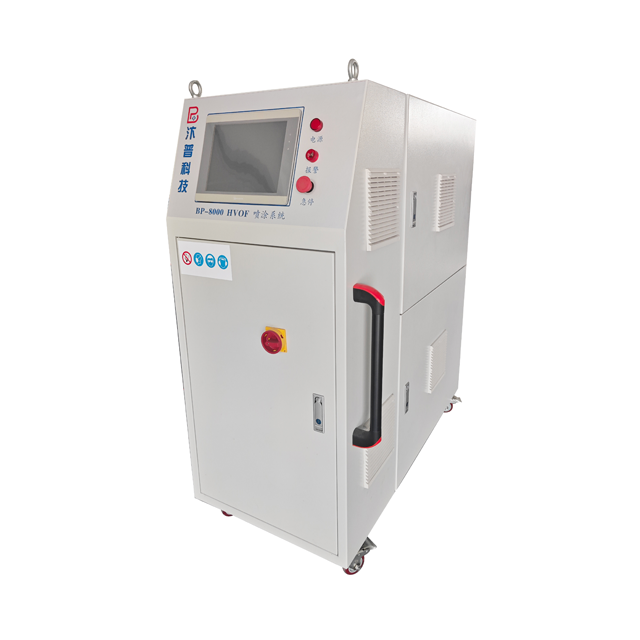
Manual HVOF operations are highly restricted in modern industrial environments due to safety and quality constraints. Handheld configurations serve specific, limited use cases. They are primarily utilized for spot repairs, highly accessible geometries in low-volume job shops, or field applications where robotic automation is physically impossible to deploy.
The limitations of manual spraying are severe. Human operators cannot maintain a perfectly consistent standoff distance or a uniform traverse speed over extended periods. This variability leads directly to inconsistent coating thickness, localized overheating of the substrate, and compromised microstructural uniformity. Manual operation induces high operator fatigue due to the heavy gun weight, intense acoustic output, and physical resistance of the stiff supply hoses. The thrust from the supersonic flame pushes back against the operator constantly. The safety and ergonomic risks associated with manually handling a supersonic, high-temperature flame are substantial.
For industrial-scale production, robotic integration is an absolute necessity. A robotic Industrial HVOF Spray System eliminates human error, ensuring absolute repeatability across large batches. These systems are designed for high-volume OEM production, continuous processing, and applications requiring strict aerospace or oil and gas tolerances.
When evaluating robotic systems, focus on integration capabilities. The system must seamlessly interface with multi-axis robots and synchronized turntables or lathes. This synchronization ensures highly uniform and consistent thickness, even on complex geometries like turbine blades or asymmetrical pump housings. You program the step size and the surface speed to ensure every square inch receives the exact same amount of powder.
Mount the spray gun securely to the 6-axis robotic arm using a heavy-duty, insulated bracket.
Integrate the robot controller with the part handling equipment (turntable or lathe) to synchronize rotational speed with the robot's vertical traverse speed.
Program the exact standoff distance, ensuring the nozzle remains perfectly perpendicular to the substrate surface throughout the entire tool path.
Run a dry simulation to verify reach, check for collision risks, and confirm the hoses have sufficient slack to articulate without binding.
The spray gun is the heart of the HVOF process. Its internal geometry dictates the fluid dynamics of the combustion gases and the acceleration profile of the powder particles. Most modern guns utilize a converging-diverging (de Laval) nozzle design to achieve supersonic velocities. Assess the hardware longevity of the specific gun design. Evaluate nozzle lifespan under continuous operation, the frequency of required replacements, and the ease of swapping hardware between different material runs. Some designs feature modular components that allow operators to change barrel lengths (e.g., 4-inch versus 6-inch barrels) to optimize particle dwell time for different powder morphologies.
Thermal management within the gun is a critical evaluation point. Evaluate the cooling mechanisms carefully. True industrial HVOF requires rigorous water cooling. The efficiency of the water-cooling jacket directly impacts continuous operation limits and overall gun longevity. Inadequate cooling leads to premature O-ring failure, warped combustion chambers, and unstable flame characteristics. If the chiller fails or flow drops below the required threshold, the internal hardware will melt in seconds.
The precision of the control console dictates the consistency of the coating. Outdated systems relying on manual rotameters cannot provide the accuracy required for modern industrial standards. You must prioritize systems equipped with advanced Mass Flow Controllers (MFC). MFCs measure the actual mass of the gas, not just the volume. They ensure exact fuel-to-oxygen ratios by automatically compensating for fluctuations in supply pressure or ambient temperature.
This precise stoichiometric ratio control is fundamental to batch-to-batch coating repeatability. Even minor deviations in the oxygen-to-fuel ratio alter the flame temperature and combustion pressure, directly impacting particle velocity and melting behavior. Evaluate the user interface of the control console. PC-based interfaces generally offer superior data logging, real-time monitoring, and trend analysis capabilities compared to basic PLC screens. Comprehensive data logging is a mandatory requirement for maintaining quality assurance and achieving NADCAP compliance in the aerospace sector.
Consistent powder delivery is just as important as stable combustion. If the powder feed rate fluctuates, the coating density will vary, leading to localized weak points. Compare the primary delivery mechanisms: fluidized bed feeders versus volumetric disc feeders. Fluidized bed systems use a carrier gas to suspend the powder before transporting it to the gun, which works well for fine, highly flowable powders. Volumetric disc feeders use a rotating slotted wheel to deliver precise volumes of powder, offering robust performance across a wider range of powder sizes and morphologies.
Evaluate how the feeder design impacts feed rate stability. The system must prevent pulsing, clogging, or inconsistent powder delivery during long spray cycles. Pay close attention to the carrier gas flow controls. The carrier gas must transport the powder into the high-pressure combustion chamber without disrupting the flame dynamics or causing the powder to bounce off the supersonic gas stream.
| Feeder Type | Mechanism | Primary Advantage | Potential Drawback |
|---|---|---|---|
| Volumetric Disc | Rotating slotted wheel drops powder into gas stream | Highly consistent across various powder sizes | Requires frequent cleaning of the disc slots |
| Fluidized Bed | Gas suspends powder in a pressurized hopper | Excellent for very fine, flowable powders | Prone to rat-holing if powder clumps |
| Screw Feeder | Auger pushes powder into the delivery line | Handles cohesive or sticky powders well | Can cause pulsing at low feed rates |
Installing an HVOF system requires substantial facility modifications to ensure operator safety and environmental compliance. The most immediate hazard is acoustic output. HVOF systems generate extreme noise levels, frequently exceeding 120 to 130 decibels. Standard ear protection is entirely insufficient. Specialized soundproofing, typically in the form of heavy-duty, modular acoustic enclosures, is mandatory. These enclosures must be engineered with 4-inch thick acoustic panels and specialized ventilation baffles to allow air exchange without leaking hazardous noise into the surrounding factory environment.
Air quality and extraction present another major facility challenge. The HVOF process generates significant amounts of hazardous overspray and ultrafine metallic dust. Implementing high-efficiency dust collection is critical. Depending on the materials being sprayed, you will need either wet scrubbers or dry cartridge collectors equipped with HEPA filtration. Spraying materials containing chromium or nickel requires strict adherence to environmental regulations regarding airborne exposure limits. If you spray reactive metals, the dust is highly explosive, making a wet scrubber mandatory to drown the particulate in water. The extraction system must maintain sufficient negative pressure within the acoustic enclosure to capture all particulate matter efficiently.
Upgrading to advanced thermal spray technology introduces a significant learning curve for production personnel. Bridging the skills gap is a critical implementation step. The transition from manual spraying or basic machining operations to programming 6-axis robotic systems and interpreting complex MFC data requires specialized, highly trained personnel. Operators must understand the physics of thermal spray, not just how to press start on a control panel.
Evaluate the vendor support infrastructure before finalizing equipment selection. The depth of the vendor's training programs directly impacts your time-to-production. Look for manufacturers that provide comprehensive on-site commissioning, extensive classroom and practical training, and ongoing process optimization support. A reliable vendor will assist in developing initial spray parameters and provide troubleshooting guidance during the critical first months of operation.
The optimal HVOF spray equipment aligns fuel architecture and automation levels directly with exact production volumes, material specifications, and facility capabilities. Liquid-fueled systems provide the massive kinetic energy required for thick, dense carbide coatings, while gas-fueled systems offer precise thermal control for specialized matrices. Regardless of the fuel type, robotic integration and advanced mass flow control are non-negotiable for achieving industrial-scale repeatability. Prioritize equipment manufacturers that offer closed-loop control systems, highly transparent operational interfaces, and robust local engineering support.
Request sample component coatings from equipment vendors to physically verify density, porosity, and microstructural uniformity under a microscope.
Conduct a comprehensive facility audit to confirm your infrastructure can support the necessary gas storage, high-capacity electrical power, industrial chillers, and exhaust requirements.
Schedule a technical demonstration with shortlisted vendors to evaluate the software interface, robotic integration capabilities, and ease of hardware maintenance.
Define your exact material specifications and primary failure modes to ensure you select the correct fuel architecture for your specific application.
A: Gas-fueled systems use gases like hydrogen or propylene. They operate at lower temperatures, which prevents decarburization when spraying fine-matrix carbides. Liquid-fueled systems use kerosene. They generate higher combustion pressures and particle velocities. This produces thicker, denser coatings with high compressive stresses. Liquid systems are preferred for heavy industrial wear applications.
A: Choose HVOF when your primary goal is combating extreme wear, abrasion, and friction using hard materials like tungsten carbide. HVOF provides superior kinetic energy for dense, tightly bonded coatings. Plasma Spray is better suited for extreme heat environments, thermal barrier coatings, or applying ceramics to highly complex geometries.
A: The primary quality factors include coating porosity, which typically must remain under 1%. Bond strength is another major factor, often exceeding 10,000 psi for properly applied carbides. Microstructural uniformity and the presence of compressive residual stresses also dictate quality. Proper equipment selection ensures precise control over particle velocity to meet these metrics.
A: Installations require heavy-duty acoustic enclosures to manage noise levels exceeding 120 dB. Facilities also need high-efficiency dust extraction, such as wet scrubbers or HEPA dry collectors, to handle hazardous overspray. You must install high-capacity industrial water chillers for gun cooling and compliant storage for flammable gases or liquid fuels.
A: HVOF is optimized for hard, wear-resistant materials. Common feedstocks include tungsten carbide-cobalt, chromium carbide-nickel chromium, Stellite alloys, Inconel, and Triballoy. You can also spray various other specialized metal-based superalloys designed to resist severe abrasion and corrosion in harsh industrial environments.
A: Maintenance involves strictly adhering to rebuild schedules. You must replace worn O-rings, inspect the water-cooling jacket, and swap out degraded nozzles. For liquid-fueled systems, operators must frequently clean the combustion chamber to remove carbon buildup. This buildup can disrupt flame geometry and cause spitting, which ruins the coating finish.


