
Views: 0 Author: Site Editor Publish Time: 2026-09-09 Origin: Site


Premature water tank coating failures carry a compounding financial impact. Facility downtime, structural degradation, and repeated maintenance cycles quickly drain operational budgets. The core problem lies in achieving a consistent, long-lasting anodic layer inside large-scale or confined environments. Manual application often introduces human error. This leads to variable coating thickness and localized corrosion. Upgrading to automated systems solves this issue directly.
Transitioning from manual thermal spray methods to automated solutions fundamentally shifts your operational efficiency. It ensures predictable asset protection and faster turnaround times. You also achieve strict compliance with industry standards. When you remove operator fatigue from the equation, coating uniformity improves drastically. This guide explores exactly when and why you should integrate automated systems for heavy-duty tank corrosion protection.
Automatic systems eliminate coating thickness variance, maximizing the lifecycle and effectiveness of sacrificial corrosion coatings against chemical attack and abrasion.
Integrating robotic arc spraying mitigates severe confined-space safety risks while significantly increasing hourly deposition rates.
The higher initial capital expenditure for automated zinc coating equipment is rapidly offset by reduced labor hours, lower material waste, and the ability to repurpose portable equipment for other municipal assets.
Push/pull wire feed systems are a critical technical requirement for maintaining continuous, jam-free operation across the expansive interiors of industrial water tanks.
Beyond surface protection, arc spray technology enables dimensional restoration and component reclamation for heavily pitted steel structures.
The physics behind twin wire arc thermal spray rely on electrical currents and compressed gas. Two consumable metal wires feed into a spray gun. An electrical arc ignites between the wire tips, melting the metal instantly at temperatures exceeding 7,000 degrees Fahrenheit. High-pressure compressed air, typically regulated between 90 and 110 PSI, atomizes this molten material. The air stream propels the fine metal particles toward the prepared steel substrate at high velocities. Upon impact, the particles flatten and rapidly solidify. This forms a dense, mechanically bonded metallic layer. The process generates minimal heat transfer to the substrate. The steel surface rarely exceeds 250 degrees Fahrenheit, which prevents structural distortion in thin-walled steel tanks.
Material selection dictates the longevity of your protective layer. Pure zinc offers excellent galvanic protection in standard potable water environments. It acts as a highly active anode. Pure aluminum provides superior resistance in highly acidic environments or areas with heavy sediment abrasion due to its harder oxide film. Zinc-aluminum alloys, typically in an 85/15 ratio by weight, combine the best traits of both metals. The alloy delivers the active galvanic protection of zinc alongside the barrier strength and chemical resistance of aluminum. This makes the 85/15 alloy highly effective against water treatment chemicals like chlorine and chloramines.
You must understand the difference between anodic protection and passive barrier protection. Passive barriers include traditional epoxies and polyurethanes. They simply block moisture from reaching the steel. However, if a scratch or impact breaches the epoxy, water attacks the exposed steel immediately. Rust undercuts the coating, causing massive blistering and eventual failure. Metalized layers provide active, sacrificial protection. Because zinc and aluminum are more electrochemically active than steel, they sacrifice themselves. They attract the corrosion process. Even if a deep scratch exposes the underlying steel, the surrounding anodic layer prevents rust from forming by acting as a galvanic anode.
Manual application presents severe limitations during large-scale tank projects. Operator fatigue sets in quickly when handling heavy spray guns and thick cables for hours. This fatigue alters the standoff distance and spray angle. Inconsistent angles increase coating porosity and reduce bond strength. Variable standoff distances create drastic mil thickness fluctuations. Thin spots become vulnerable to early corrosion. Thick spots waste expensive consumable wire and risk internal coating stress, which can lead to delamination.
Automated systems eliminate these variables entirely. Utilizing automatic arc spray equipment maintains a mathematically precise standoff distance, usually locked in at exactly six to eight inches from the substrate. It locks in the optimal 90-degree spray angle. The traverse speed remains constant across the entire surface area, controlled by programmable logic controllers (PLCs). This automation guarantees uniform application parameters. You achieve repeatable quality and continuous operation. The shift to automation transforms a highly variable manual craft into a predictable, engineered industrial process.
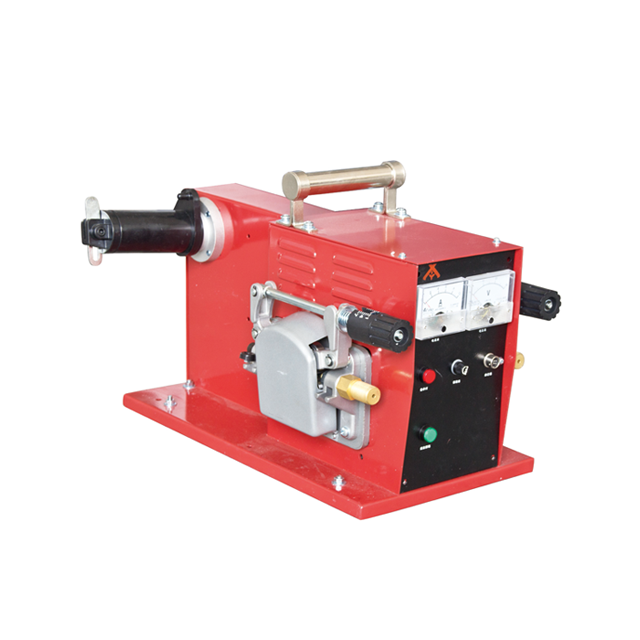
Manual application becomes economically unviable at specific volume thresholds. When a tank interior exceeds 10,000 square feet, manual spraying takes too long. Labor costs multiply as crews spend weeks inside the structure. The project timeline stretches, keeping critical municipal infrastructure offline. Extensive downtime forces facilities to rely on backup reservoirs, limit water distribution, or implement temporary bypass pumping systems. You must evaluate the square-footage metrics before starting the project to determine the most efficient application method.
Automated systems compress these project schedules aggressively. A mechanized setup can operate continuously without breaks for operator fatigue or heat exhaustion. It covers significantly more square footage per hour, often tripling the output of a manual operator. This accelerated turnaround time minimizes the duration a water tank remains out of service. Faster completion means lower labor overhead, reduced equipment rental durations for scaffolding and dehumidifiers, and faster restoration of facility operations.
Aging water infrastructure often suffers from severe localized pitting. Steel plates, internal flanges, weld seams, and structural supports degrade over decades of immersion. Replacing these heavily pitted steel components requires cutting, welding, and massive structural overhauls. Arc Spray Equipment offers an alternative solution through dimensional restoration. You can use the equipment to rebuild lost metal volume directly on site without hot work permits.
Operators spray thick layers of compatible metal directly into the pitted areas. The mechanical bond restores the original dimensions of the steel substrate. Once the pits are filled and leveled, you apply the final anodic protective layer over the entire surface. This dual capability prevents costly steel replacement. It extends the asset life of older tanks by decades, saving massive structural repair budgets and preserving the original integrity of the vessel.
Quality assurance depends entirely on parameter control. Coating density and bond strength rely on precise traverse speeds and overlap ratios. If the gun moves too fast, the coating becomes too thin and porous, failing to provide adequate galvanic protection. If the gun moves too slowly, the coating builds up too much internal stress and may delaminate from the substrate. Automated systems lock these parameters into a programmable logic controller.
This strict control prevents localized failures. Automation guarantees uniform mil thickness across every square inch of the tank interior. Quality inspectors spend less time marking thin spots for rework and more time verifying overall compliance. You eliminate the human inconsistencies that lead to premature corrosion. Consistent application ensures the sacrificial layer degrades evenly over its multi-decade lifespan, providing predictable maintenance cycles.
Water tanks are hazardous confined spaces. Thermal spraying generates intense noise exceeding 115 decibels, high ambient heat, and heavy concentrations of fine metal dust. Placing a human operator inside this environment requires extensive safety protocols. You need supplied-air respirators, heavy protective leathers, and constant atmospheric monitoring. Operator heat exhaustion remains a constant threat, requiring frequent mandatory rest periods that halt production.
Implementing robotic arc spraying removes the human from the immediate hazard zone. Operators control the robotic crawler from a safe location outside the tank or from a protected, ventilated control cabin. This hazard mitigation drastically improves site safety. It also simplifies regulatory compliance. Meeting OSHA confined space and respiratory protection standards becomes much easier when workers are not actively spraying inside the enclosed structure.
Navigating the deep interiors of water tanks requires long hose lengths. The primary power supply and wire spools usually remain outside the tank to avoid contamination and save space. You often need 50 to 150 feet of cabling to reach the application area. Standard push-only wire feeders fail at these distances. Friction inside the liner causes the wire to buckle, stall, and jam. You must utilize push/pull drive systems for these specific environments.
Push/pull technology uses a primary motor at the wire spool to push the material into the liner. A secondary motor located at the spray head pulls the material simultaneously. This synchronized tension is mandatory when managing soft wires. Pure zinc and aluminum are highly ductile. Without a pull motor, these soft metals easily bird-nest inside the drive rolls, causing massive downtime. Push/pull systems ensure continuous, jam-free operation over extended distances.
The power supply dictates the melting capacity of your equipment. Standard units typically offer 350 amps of output. These work well for manual touch-ups, small components, or complex geometries like pipe internals. High-output power supplies deliver 500 amps, 600 amps, or more. Higher amperage allows you to feed wire at a faster rate. The arc melts more metal per minute, directly increasing your deposition rate and overall productivity.
You must correlate amperage capabilities directly to square-footage coverage per hour. A 500-amp system covers significantly more area than a 350-amp system. When running automated tracks, you need high deposition rates to sustain continuous fast traverse speeds. Undersized power supplies will bottleneck your automated crawler, forcing it to move slowly to achieve the required mil thickness. This defeats the purpose of upgrading to automation.
Municipal water tank sites present difficult logistical challenges. Equipment must be transported, unloaded, and maneuvered into tight spaces, often on uneven terrain. You need trailer-mounted or skid-mounted automated systems designed specifically for field deployment. Fixed automation systems belong in manufacturing facilities, not on active construction sites. Field portability ensures rapid setup, easy repositioning, and efficient teardown.
You must also evaluate integration capabilities. The zinc coating equipment must interface seamlessly with portable robotic crawlers. It should connect easily to magnetic tracks, automated winch systems, or remote-controlled boom lifts used inside the tanks. Furthermore, portable systems offer cross-asset versatility. You can repurpose the same equipment to coat bridges, transmission towers, and light poles. This versatility maximizes the utility of your capital investment.
| Operational Metric | Manual Arc Spray Application | Automated Arc Spray Application |
|---|---|---|
| Standoff Distance Control | Variable (Fluctuates with operator fatigue) | Fixed and mathematically precise |
| Coating Thickness (Mil Profile) | Inconsistent across large surface areas | Highly uniform and repeatable |
| Hourly Deposition Rate | Limited by mandatory operator rest periods | Continuous high-output capacity |
| Confined Space Safety Profile | High exposure to metal dust and noise | Operators removed from the primary hazard zone |
| Ideal Project Application | Small repairs, complex geometries, touch-ups | Large tanks, extensive flat surfaces, long runs |
Upgrading your application methods requires a higher initial capital expenditure. Automated systems, robotic crawlers, and high-output power supplies cost significantly more than traditional manual rigs. You must view this upfront cost through the lens of long-term operational efficiency. The immediate financial outlay translates directly into accelerated project completion and massive labor reductions across the entire project lifecycle.
You calculate your return on investment by tracking reduced labor hours. Automated systems require fewer technicians inside the tank. Faster turnaround times mean you complete more projects per year with the same crew size. You also eliminate QA-related rework. Manual spraying often requires technicians to go back, re-blast, and fix thin spots. Automation gets it right the first time. Cross-asset utilization further accelerates the financial return as you deploy the equipment across various municipal structures.
Zinc and aluminum wire represent a major portion of your project budget. Manual spraying wastes a significant amount of this consumable material. When an operator alters the spray angle, metal particles bounce off the substrate instead of bonding. This overspray falls to the tank floor as wasted dust. Automated systems optimize consumable usage by locking in the perfect 90-degree spray angle at all times.
Maintaining optimal angles ensures maximum transfer efficiency. More metal sticks to the wall, and less falls to the floor. You must quantify the financial impact of this waste reduction. Saving just ten to fifteen percent of your wire consumption on a massive tank project translates to substantial material savings. Over the lifespan of the equipment, this optimized efficiency pays for the automation upgrades and increases your profit margins on fixed-bid contracts.
Automated thermal spraying requires flawless surface preparation. The molten metal particles rely entirely on a mechanical bond. There is no chemical adhesion involved in this process. You must adhere strictly to abrasive blasting profiles, specifically SSPC-SP 5/NACE No. 1 White Metal Blast. The steel must be completely free of rust, mill scale, old paint, and invisible soluble salts. It also needs a sharp, angular surface profile, typically between 2.5 and 4.0 mils deep, achieved by using angular grit rather than round shot.
If the profile is too shallow, the coating will delaminate under its own weight. To mitigate this risk, you must implement strict inline surface profile testing protocols. Technicians should use replica tape and digital micrometers to verify the anchor pattern before deploying the automated spray equipment. You must also test for surface dust and chlorides. Never begin spraying until the surface preparation passes rigorous, documented inspection.
Transitioning your crew presents a distinct learning curve. Operating a manual spray gun relies on physical technique and muscle memory. Programming a robotic system requires technical calibration skills. Operators must learn how to navigate PLC interfaces. They need to understand wire tensioning on push/pull drives to prevent feed issues. They must also learn how to program robotic paths to ensure proper overlap between passes, usually aiming for a 50 percent overlap to guarantee uniform coverage.
You mitigate this technical gap through comprehensive training. Rely on vendor-supplied training programs and field commissioning services. Technicians must practice calibrating the equipment on test panels before entering the water tank. They need to understand how voltage and amperage adjustments affect the final coating density and particle size. Proper training prevents costly programming errors that could ruin large sections of the prepared substrate.
Thermal spray coatings are highly sensitive to atmospheric conditions inside steel tanks. High humidity causes flash rust on freshly blasted white metal. If microscopic moisture forms on the substrate, the mechanical bond fails instantly, leading to catastrophic delamination. The ambient temperature and dew point dictate your application window. The steel surface temperature must remain at least 5 degrees Fahrenheit above the dew point at all times during blasting and spraying.
You must deploy heavy-duty environmental controls to support the automated process and protect your water tank coating. Industrial desiccant dehumidification units are mandatory. They pump dry air into the tank, keeping humidity levels safely below 50 percent. You also need high-capacity dust extraction systems. These vacuums remove the atomized metal dust from the air, maintaining visibility for the robotic cameras and preventing dust from settling on uncoated steel.
Automated systems represent an indispensable upgrade for high-liability water tank projects. They guarantee the multi-decade coating lifespans required by modern infrastructure. By eliminating human error, you ensure uniform anodic protection and gain the ability to restore heavily pitted steel dimensions. To move forward effectively, follow these actionable steps:
Prioritize equipment selection based on push/pull drive reliability and seamless integration with your existing robotic crawler systems.
Conduct a pilot test on sample steel plates to verify deposition rates, transfer efficiency, and bond strength with the equipment manufacturer.
Perform a localized operational savings analysis comparing manual labor hours against automated turnaround times for your next large tank project.
Upgrade your site environmental controls, ensuring your dehumidification and dust extraction units can handle continuous automated spraying.
A: When applied correctly over a white metal blast, automated zinc or zinc-aluminum coatings can easily exceed 20 to 30 years of service life. The uniform thickness provided by automation prevents the localized thin spots that typically cause premature manual coating failures.
A: Yes. High-quality systems handle all three materials. However, you must adjust the voltage, amperage, and air pressure settings for each specific metal. You also need a reliable push/pull wire drive system to prevent soft pure zinc or aluminum wires from jamming.
A: Robotic systems lock the spray gun at a perfect 90-degree angle and maintain a precise, unchanging standoff distance. This exact consistency maximizes particle impact velocity and density, resulting in superior mechanical adhesion and lower porosity compared to manual application.
A: It depends on the water chemistry and regulatory requirements. While the metalized layer provides excellent standalone sacrificial protection, applying a compatible epoxy or polyurethane sealer fills the microscopic pores. This extends the life of the anodic layer by slowing down its sacrificial consumption.
A: You must achieve an SSPC-SP 5/NACE No. 1 White Metal Blast. The surface must be completely clean and feature a sharp, angular anchor profile of 2.5 to 4.0 mils. Thermal spray relies entirely on mechanical bonding, making strict surface preparation non-negotiable.
A: While automated crawlers excel on large flat surfaces and long vertical runs, complex geometries like internal piping, ladders, and tight corners still require manual intervention. Crews typically use automated systems for the bulk of the tank and switch to manual guns for the intricate details.


