
Views: 0 Author: Site Editor Publish Time: 2026-09-18 Origin: Site


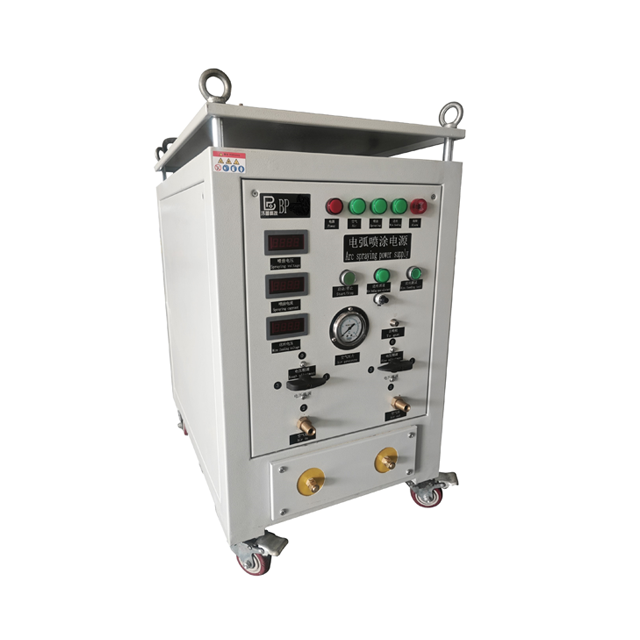
High-performance cookware manufacturing relies on advanced surface modifications to meet consumer demands for induction compatibility, rapid thermal distribution, and extreme durability. Manufacturers must apply metallic layers, such as magnetic stainless steel on aluminum substrates, at high production speeds without causing thermal distortion, delamination, or excessive unit costs. Selecting the right Arc Spray Equipment requires balancing capital expenditure with operational throughput, automation capabilities, and strict metallurgical quality controls. This guide breaks down the technical evaluation criteria for integrating arc spray systems into cookware production lines. We cover equipment selection, process parameters, and quality assurance protocols to help engineering teams optimize their surface treatment operations.
Application Specificity: Arc spray is primarily utilized in cookware for depositing ferromagnetic layers (for induction heating), creating highly textured bonding profiles for subsequent non-stick topcoats, and applying anodic layers for corrosion resistance.
Thermal Management: Unlike high-heat processes that risk warping thin-gauge pans, twin-wire arc spray maintains low substrate temperatures, preserving the structural integrity of the cookware.
System Evaluation: Procurement decisions should prioritize stable power supplies, reliable push-pull wire feeders, and seamless integration with robotic spray cells for high-volume repeatability.
Cost-to-Performance Ratio: Compared to plasma or HVOF systems, arc spray coating equipment offers a lower cost per square inch of coating with deposition rates suitable for mass production.
Modern induction stovetops require cookware with a ferromagnetic base to generate heat through magnetic resistance. Many premium pans utilize aluminum or copper bodies for their superior thermal conductivity. These non-magnetic materials cannot interact with induction coils on their own. Manufacturers solve this by spraying magnetic stainless steel, typically 420 or 430 grade, directly onto the exterior base of the pan. The atomized metal particles impact the substrate at velocities exceeding 100 meters per second, flattening out and interlocking with the microscopic peaks and valleys of the prepared surface. This creates a dense, mechanical bond capable of withstanding the rapid, repeated thermal cycling inherent to induction cooking without separating from the softer aluminum core. The thickness of this layer dictates the magnetic mass, which directly influences how fast the pan heats up on the stove.
Applying non-stick surfaces like PTFE or sol-gel ceramics directly to smooth metal often results in poor longevity. The coating eventually flakes or scratches off under mechanical stress from spatulas and washing. Using arc spray coating equipment, manufacturers deposit a macro-roughened intermediate bonding layer, commonly referred to as an anchor profile. This hard metallic layer acts like microscopic velcro. When the liquid polymer or ceramic is applied over it, the material flows into the deep crevices of the sprayed metal. Once cured, the topcoat is mechanically locked into place. This intermediate layer prevents delamination and significantly increases the scratch resistance of the final product. Engineers typically target a specific surface roughness, measured in Ra or Rz, to match the viscosity and film build requirements of the chosen topcoat.
Certain cookware materials, such as carbon steel woks or cast iron skillets, are highly susceptible to rust and oxidation when exposed to moisture and acidic foods. Applying aluminum or zinc-aluminum alloys directly onto these susceptible exteriors provides exceptional defense. This sprayed layer acts as a sacrificial anode. Because zinc and aluminum are more galvanically active than steel, they will oxidize first, drawing corrosion away from the underlying structural metal. This anodic protection extends the lifespan of the cookware surface treatment, ensuring the exterior remains visually appealing and structurally sound even after years of harsh kitchen environments. The porosity of the sprayed layer can also be sealed with high-temperature food-safe resins to further block moisture penetration.
The operational mechanics of this system are straightforward yet highly effective for industrial scaling. The spray gun continuously feeds two separate consumable metal wires into the gun head. A direct current power supply charges one wire positively and the other negatively. As the two wire tips converge, they create a short circuit, generating an intense electric arc that reaches temperatures high enough to instantly melt the metal. Simultaneously, a jet of high-pressure compressed air blasts through the arc zone. This primary atomization air shears the molten metal into fine droplets and propels them toward the cookware surface. This specific thermal spray coating mechanism delivers rapid, large-area coverage. It eliminates the need for combustible gases and avoids complex secondary curing steps, making it highly advantageous for continuous pan manufacturing.

The primary metric for a successful induction base or anchor profile is its adhesion strength. This is quantified in megapascals (MPa) using standardized pull-off testing methods like ASTM C633. The coating must survive extreme thermal shock—moving from a hot stove directly into cold dishwater—without spalling, cracking, or peeling. Achieving high bond strength relies entirely on proper substrate preparation. Before any metal hits the pan, the surface must undergo aggressive grit blasting using aluminum oxide or chilled iron grit. This removes oxides and creates the necessary surface roughness for the incoming molten particles to grip. Without strict control over the grit blasting parameters, including air pressure and media mesh size, even the best spray equipment will yield failing coatings.
Degrease the aluminum or steel substrate to remove all stamping lubricants.
Grit blast the target area using 24-36 mesh brown fused alumina at 60-80 psi.
Blow off residual dust with clean, dry compressed air.
Apply the arc spray coating within two hours to prevent flash oxidation.
Every thermally sprayed layer contains some degree of porosity, consisting of microscopic voids between the flattened metal splats. In cookware manufacturing, controlling this porosity is critical. Excessive voids act as thermal insulators, disrupting the efficient transfer of heat from the induction base into the cooking vessel. High porosity can also trap moisture, cooking oils, or cleaning chemicals beneath the surface, leading to internal corrosion or premature topcoat failure. Manufacturers must establish strict porosity thresholds, typically keeping void content below 5% for induction bases. Adjusting atomization air pressure, spray distance, and voltage helps dial in a denser, more uniform metallic layer. Metallographic cross-sections are routinely analyzed under microscopes to verify the density of the applied layer.
Applying molten steel to thin-gauge aluminum presents a severe risk of thermal distortion. If the aluminum pan absorbs too much heat during the spray process, it will warp, rendering it useless for flat glass stovetops. Arc spray mitigates this risk better than traditional welding or cladding techniques. The extreme heat is highly localized at the electric arc itself. By the time the atomized droplets travel the standoff distance to the pan, they are already cooling. Furthermore, the continuous blast of compressed air used for atomization acts as an active cooling mechanism for the substrate. This keeps the bulk temperature of the aluminum well below its deformation point, preserving the exact geometric tolerances of the cookware. Engineers often use infrared pyrometers to monitor pan temperatures in real-time during the spray cycle.
The backbone of any arc spray setup is the power supply. Industrial systems require robust, constant-voltage DC rectifiers capable of sustaining continuous arcs over long production shifts. The amperage capacity directly dictates the deposition rate—how many pounds of metal can be sprayed per hour. A 350-amp system might suffice for a smaller, specialized cookware line, but high-volume automated plants typically require 500-amp or even 1000-amp power supplies to maintain high line speeds. Consistent voltage control is non-negotiable. Voltage fluctuations alter the arc gap and droplet size, resulting in uneven coating textures and inconsistent magnetic properties across a batch of induction pans. Modern inverter-based power supplies offer the precise electrical control necessary for strict quality assurance, minimizing voltage ripple and ensuring a stable arc.
Feeding the consumable wire smoothly into the gun is the most common point of mechanical failure in thermal spraying. Systems generally use push, pull, or push-pull drive configurations. Push systems use a motor at the feeder to push the wire through a conduit to the gun. Pull systems put the motor inside the gun itself. For automated cookware lines, push-pull systems are the gold standard. They synchronize a motor at the wire spool with a motor in the spray gun, ensuring slip-free, continuous feeding even through long or curved conduits. If the wire feed stutters, the arc extinguishes and reignites, spitting large, un-atomized chunks of metal onto the pan. Reliable wire feeding guarantees arc stability and uniform coating thickness. Drive rolls must be matched to the wire type, using knurled rollers for harder steel wires and U-groove rollers for softer aluminum wires.
The physical design of the spray gun dictates how easily it integrates into a production cell. For robotic mounting, the payload weight of the gun matters. Heavy, cumbersome guns limit the speed and agility of the robot arm as it maneuvers around the curved edges of a skillet. The gun must also feature precise atomization air pressure controls. Different nozzle geometries shape the spray plume. A tightly focused converging nozzle concentrates the metal stream, minimizing overspray and material waste when coating the localized base of a small saucepan. Conversely, diverging nozzles create a wider fan pattern, ideal for rapidly coating the expansive surface of a large griddle. The air caps must be machined to tight tolerances to ensure the air jet intersects the arc exactly at the point of melting.
Combustion wire flame spray uses an oxy-fuel flame to melt the wire instead of electricity. While older and sometimes cheaper to install, flame spray falls short for modern cookware production. It transfers significantly more heat into the substrate, increasing the risk of pan warpage. Flame spray also yields lower particle velocities, resulting in lower bond strengths and higher porosity. Twin wire arc spray offers faster throughput, denser coatings, and superior mechanical adhesion. Because it relies on electricity and compressed air rather than volatile combustible gases, arc spray is also safer and easier to integrate into automated factory environments. The elimination of acetylene or propane storage also simplifies facility safety compliance.
Plasma spray generates a plasma jet to melt ceramic or metallic powders. It produces incredibly dense, high-quality coatings and is widely used in aerospace and medical implants. However, for standard cookware surface modification, plasma spray is vastly over-engineered. The capital expenditure for a plasma system is exceptionally high, and the operational complexity requires specialized technicians. Plasma also relies on expensive noble gases like argon or helium. When comparing metal spraying equipment for high-volume consumer goods, arc spray hits the optimal middle ground. It delivers the exact metallurgical properties required for induction bases and anchor profiles at a fraction of the cost per square inch, with deposition rates that keep up with fast-paced stamping and forming lines.
| Feature | Twin-Wire Arc Spray | Combustion Flame Spray | Plasma Spray |
|---|---|---|---|
| Heat Source | Electric Arc | Oxy-Fuel Flame | Plasma Jet |
| Substrate Heating | Low (Air Cooled) | High (Risk of Warping) | Medium to High |
| Bond Strength | High (30 - 50 MPa) | Moderate (15 - 30 MPa) | Very High (>60 MPa) |
| Particle Velocity | 100 - 150 m/s | 30 - 50 m/s | 300 - 600 m/s |
| Operating Cost | Low (Electricity + Air) | Medium (Combustible Gases) | High (Noble Gases + Power) |
| Ideal Cookware Use | Induction bases, anchor profiles | Low-volume manual coating | Specialty high-end ceramics |
Manual spraying is insufficient for the volume and consistency required in commercial cookware manufacturing. Integrating spray guns with 6-axis industrial robots ensures that every pan receives the exact same coating thickness and spray angle. The cookware is typically mounted on synchronized rotating carousels or spindles. As the pan spins, the robot arm traverses across the base. Programmable logic controllers (PLCs) manage the entire recipe. The PLC coordinates the robot's traverse speed, the spindle's RPM, the gun's standoff distance, and the power supply's voltage and amperage. This level of automation eliminates human error, reduces material waste, and guarantees batch-to-batch uniformity for the final cookware coating application. Tool Center Point (TCP) programming allows the robot to maintain a perfect 90-degree spray angle even on curved wok bottoms.
Atomizing molten metal generates significant amounts of fine metallic dust and fumes. Left unmanaged, this dust poses severe respiratory hazards to workers and creates a risk of combustible dust explosions. Proper environmental controls are mandatory. Production lines must enclose the robotic spray cells in downdraft booths that pull the overspray away from the work zone. The exhaust air is routed into heavy-duty dust collectors. For reactive metals like aluminum, wet dust collectors (scrubbers) are required to neutralize the explosion risk by trapping the particles in a water bath, complying with NFPA 484 standards. Acoustic enclosures are also necessary, as the atomization process generates noise levels well above OSHA safety limits, often exceeding 110 decibels.
Maintaining quality without bottlenecking the production line requires rapid, non-destructive testing (NDT) methods. Manufacturers use eddy current testing devices to instantly measure the thickness of the sprayed stainless steel layer on the aluminum pans. This ensures the induction base has enough magnetic mass to function properly on a stove. Handheld profilometers are used to verify the surface roughness of the anchor profiles before the pans move to the non-stick coating booths. By integrating these testing stations directly adjacent to the spray cells, operators can detect deviations immediately and adjust the PLC parameters before producing a large batch of defective cookware. Statistical Process Control (SPC) software tracks these metrics to identify wear trends in the spray gun consumables.
As molten metal droplets impact the pan and rapidly cool, they contract. This continuous contraction builds up residual stress within the coating layer. In thick coatings, this stress can transition from tensile to compressive, causing the edges of the sprayed layer to curl upward or, worse, causing the entire aluminum pan to bow. Mitigating residual stress requires careful thermal management. Engineers optimize the spray angles and robot traverse speeds to prevent localized heat buildup. Utilizing active air cooling jets directed at the back of the pan during deposition helps manage the thermal gradient, keeping the substrate flat and the coating securely bonded. Almen strip testing is frequently used during the setup phase to measure and calibrate the residual stress imparted by the spray parameters.
The integrity of the final surface relies entirely on the quality of the consumable wire. Using low-grade, poorly spooled, or oxidized wire directly impacts arc stability. Rust or dirt on the wire surface causes erratic electrical contact inside the gun, leading to sputtering, uneven melting, and large un-atomized inclusions on the pan. Manufacturers must establish strict procurement specifications for wire purity, tensile strength, and the physical cast and helix of the spool. Proper storage protocols are equally important. Wire spools should be kept in climate-controlled environments and remain sealed in desiccated packaging until they are loaded onto the feeders to prevent ambient humidity from causing surface oxidation.
Arc spray guns operate in brutal conditions. The internal components, particularly the copper contact tips that transfer the electrical current to the moving wire, degrade rapidly from arc erosion and mechanical friction. The air caps and wire guides also suffer wear from the continuous flow of metal and high-pressure air. If these consumables are pushed past their lifespan, the arc becomes unstable, resulting in defective cookware. The mitigation strategy is strict preventative maintenance. Plant managers must track the arc-on time of each gun and replace contact tips and air nozzles on a rigid schedule, long before wear-induced defects appear on the production line. Upgrading to silver-tungsten contact tips can extend maintenance intervals in high-volume operations.
Arc spray equipment provides a highly cost-effective, high-yield solution for applying ferromagnetic induction bases, anodic protection layers, and durable bonding profiles in modern cookware manufacturing. The technology balances rapid deposition rates with excellent thermal management, ensuring thin-gauge substrates remain distortion-free. To successfully integrate this technology into your production line, follow these actionable steps:
Audit your existing compressed air infrastructure to ensure it can deliver the continuous volume and pressure required for primary atomization and active substrate cooling.
Send bare substrate samples to equipment OEMs for test spraying to validate the exact voltage, amperage, and standoff distance required for your specific pan geometry.
Define acceptable Ra and Rz surface roughness values based on the viscosity and film build requirements of your chosen non-stick or ceramic topcoats.
Establish a rigid preventative maintenance schedule based on arc-on time to replace copper contact tips and air caps before wear affects coating quality.
A: The process primarily applies magnetic stainless steels, such as 420 grade, to create induction-compatible bases on aluminum pans. It also applies aluminum or zinc-aluminum alloys to provide specific thermal profiles or sacrificial anodic corrosion protection on carbon steel and cast iron substrates.
A: The arc-sprayed layer is typically applied to the exterior base of the pan or encapsulated completely beneath food-safe non-stick or ceramic topcoats. Because it does not have direct food contact, it does not impact food safety. All materials used must still comply with indirect contact regulations.
A: Coating thickness generally ranges from 0.1 mm to 0.5 mm. The exact thickness depends on the required magnetic mass needed for efficient induction coupling and the specific thermal design of the pan. Thicker coatings provide better magnetic response but increase residual stress.
A: Yes. The heat is concentrated precisely at the electric arc, and the molten droplets are rapidly quenched by the compressed atomizing air. The bulk temperature of the aluminum substrate remains relatively low, preventing thermal distortion and warping during the deposition process.
A: The main maintenance costs involve the routine replacement of consumable parts inside the spray gun, specifically the copper contact tubes, wire guides, and air nozzles. Additional operational costs include the continuous supply of feedstock wire, compressed air, and electricity.
A: Arc spray creates a dense mechanical bond that is highly resistant to thermal shock. It often outperforms brazed or stamped steel plates, which are prone to delamination over time due to the differing rates of thermal expansion between the steel plate and the aluminum pan.


