
Views: 0 Author: Site Editor Publish Time: 2026-08-25 Origin: Site


Surface engineering dictates the operational lifespan of heavy industrial components. Specifying the wrong coating process leads to premature component failure, catastrophic downtime, and inflated maintenance schedules. Engineering teams frequently face a choice between high-velocity and high-temperature surface treatment systems. Overlapping capabilities between these technologies obscure the most reliable choice for specific substrate conditions and environmental hazards. Selecting the correct application method requires a rigorous technical evaluation. You must analyze particle velocity, thermal dynamics, coating density requirements, component geometry, and long-term operational demands. Understanding the precise mechanical differences between high-velocity oxygen fuel systems and plasma systems ensures components survive their intended operating environments. We will break down the exact parameters that separate these two processes. This evaluation helps you match the right thermal and kinetic properties to your specific wear or heat management problems.
Kinetic vs. Thermal Energy: HVOF spray equipment relies on extreme particle velocity (kinetic energy) at lower temperatures, whereas plasma spray utilizes extreme temperatures (up to 15,000°C) with lower particle velocities.
Coating Density and Porosity: HVOF produces exceptionally dense, low-porosity coatings ideal for severe wear and corrosion resistance; plasma spray typically results in higher porosity, making it optimal for thermal barrier coatings (TBCs).
Material Compatibility: Specify HVOF for carbides and metals prone to oxidation; specify plasma spray for high-melting-point ceramics and complex geometries requiring advanced heat management.
Capital and Operational Costs: Plasma systems generally require higher initial CapEx and complex facility integrations, while HVOF operational costs (OpEx) are heavily influenced by gas consumption and safety compliance.
Industrial coating processes utilize specialized machinery to propel melted or heated materials onto a substrate. This forms a protective mechanical layer against wear, corrosion, and heat. Thermal Spray Equipment serves as the baseline category for these operations. Within this category, different systems manipulate thermal and kinetic energy to achieve specific microstructural results in the final coating. We see these systems deployed heavily in aerospace, petrochemical, and power generation sectors where component failure is not an option.
The High Velocity Oxygen Fuel process operates on the principles of controlled continuous combustion. The system mixes a fuel with oxygen inside a high-pressure combustion chamber. Common fuels include gases like propylene, propane, or hydrogen, as well as liquids like aviation-grade kerosene. This mixture ignites, generating rapidly expanding exhaust gases at extreme pressures.
These gases are forced through a converging-diverging nozzle, commonly known as a de Laval nozzle. This specific internal geometry accelerates the gas stream to supersonic speeds, frequently exceeding Mach 2. Powder feedstock is injected directly into this high-velocity gas stream. The extreme kinetic energy propels the powder particles toward the substrate at massive velocities, often between 700 and 1,000 meters per second.
Despite the intense combustion, HVOF Spray Equipment operates at relatively lower temperatures compared to other thermal methods. The gas stream typically reaches between 2,500°C and 3,000°C. This temperature softens or partially melts metallic and carbide powders without vaporizing them. The short dwell time in the flame further minimizes the thermal load on the particles, preventing metallurgical degradation before impact.
Plasma spray systems utilize electrical energy rather than combustion to generate heat. The core of the system is a plasma torch containing a cathode, usually made of thoriated tungsten, and an anode, typically machined from copper. High-voltage direct current arcs between these two electrodes. An inert primary gas, typically argon, flows directly through this electrical arc.
The intense electrical energy strips electrons from the gas atoms. This ionizes the gas and creates a highly conductive plasma plume. Operators often add secondary gases like helium or hydrogen to increase the thermal conductivity and enthalpy of the plume. Powder feedstock is injected radially or axially into this plasma stream.
The operational dynamics here rely entirely on extreme thermal output. The core of the plasma plume can reach temperatures up to 15,000°C. This allows the system to melt virtually any material known to engineering, including refractory ceramics with exceptionally high melting points. However, the particle velocity in standard atmospheric plasma spray remains subsonic, usually between 150 and 300 meters per second. This is significantly lower than the velocities achieved by high-velocity combustion systems.
Evaluating these two technologies requires analyzing the specific parameters that dictate coating performance. The interplay between heat and speed fundamentally alters how the coating bonds to the substrate and how it performs in the field.
High-velocity systems prioritize kinetic energy over thermal energy. Because the particles travel at supersonic speeds, they strike the substrate with immense physical force. This high-impact collision causes the semi-molten particles to flatten out dramatically. Engineers refer to this flattened particle as a "splat." This severe deformation creates an incredibly tight mechanical interlock with the substrate and subsequent coating layers.
Plasma systems prioritize thermal energy over kinetic energy. The particles travel slower but are completely molten upon impact. The system relies on this complete liquid state to flow into the microscopic asperities of the prepared substrate. The adhesion depends heavily on the thermal transfer and rapid solidification of the fully melted droplets.
Porosity metrics directly influence a component's resistance to environmental attacks. High-velocity coatings consistently demonstrate porosity levels well below 1%. The high kinetic impact essentially hammers the particles together, leaving virtually no voids. Plasma spray coatings typically exhibit higher porosity, generally ranging from 2% to 5% or more, depending on the specific parameters and materials used.
For corrosion and wear implications, near-zero porosity is mandatory. A dense coating acts as an impermeable barrier. Corrosive chemicals, saltwater, and hydraulic fluids cannot penetrate the coating to attack the underlying substrate. Furthermore, the dense structure provides exceptional resistance to sliding wear and abrasive forces. There are no weak points or voids to initiate localized coating failure under heavy mechanical loads.
Oxidation control presents an interesting technical reality. Even though high-velocity combustion utilizes an oxygen-rich environment, the resulting coatings contain very low oxide levels. The high particle velocity means the powder spends mere milliseconds in the flame. Combined with the relatively lower temperatures, the particles simply do not have the time or thermal energy required to oxidize significantly before striking the substrate.
Mechanical interlocking determines how well the coating stays attached under stress. The kinetic impact of high-velocity particles generates compressive residual stresses within the coating layer. Compressive stress acts to push the coating particles together. This phenomenon allows operators to apply significantly thicker coatings without the risk of spontaneous delamination or cracking.
Conversely, plasma spray generates tensile residual stresses. As the fully molten particles hit the substrate and rapidly cool, they contract. This contraction pulls the particles apart, creating tensile stress. If a plasma coating is applied too thickly, these tensile stresses will overcome the bond strength. This leads to micro-cracking, spalling, and complete coating failure. Managing the thermal expansion coefficient between the coating and the substrate is highly critical in plasma applications.
| Technical Parameter | High-Velocity Combustion | Atmospheric Plasma |
|---|---|---|
| Primary Energy Source | Combustion (Kinetic focus) | Electric Arc (Thermal focus) |
| Operating Temperature | 2,500°C to 3,000°C | Up to 15,000°C |
| Particle Velocity | 700 - 1,000 m/s (Supersonic) | 150 - 300 m/s (Subsonic) |
| Typical Porosity | < 1% (Highly dense) | 2% - 5%+ (Porous) |
| Residual Stress State | Compressive | Tensile |
| Optimal Materials | Tungsten Carbide, Chrome Carbide, Metals | Zirconia, Alumina, High-temp Ceramics |
The physical properties of the powder feedstock directly dictate the final coating quality. You cannot achieve optimal results with either system if the powder is compromised.
Powder morphology refers to the shape and structure of the individual particles. Manufacturers produce these powders using several methods, including agglomeration and sintering, casting and crushing, or gas atomization.
Agglomerated and sintered powders typically feature a spherical shape with high internal porosity. These powders flow exceptionally well through the powder feeders and hoses. They melt efficiently in plasma plumes due to their porous nature. Cast and crushed powders are angular and blocky. They are denser and require more thermal energy to soften, making them highly suitable for high-velocity combustion systems where kinetic impact drives the bonding process.
Moisture is the enemy of any thermal coating process. Powders absorb ambient humidity rapidly. If moisture enters the powder feeder, it causes clumping, erratic feed rates, and spitting at the nozzle.
Operators must store all feedstock in climate-controlled environments. Once a container is opened, the powder should be kept in heated hoppers or desiccator cabinets. If powder absorbs moisture, it must be baked in an industrial oven according to the manufacturer's specifications before use.
Coating adhesion relies entirely on the quality of the substrate preparation. Neither high-velocity nor plasma systems will bond to a contaminated or smooth surface.
Operators must achieve a specific surface roughness profile, typically measured in Ra (Roughness Average). This requires aggressive grit blasting using sharp, angular media like aluminum oxide or chilled iron grit. Round shot media is unacceptable as it peens the surface rather than cutting into it. The standard requirement is a white metal blast finish, completely free of oils, oxides, and previous coatings.
Once blasted, the substrate becomes highly reactive. Flash rusting can occur within hours if the ambient humidity is high.
Move blasted components into a climate-controlled holding area immediately.
Maintain relative humidity below 40% in the staging zone.
Apply the thermal coating within four hours of the blasting process to guarantee maximum bond strength.
Handle all prepared parts with clean, lint-free gloves to prevent oil transfer from human skin.
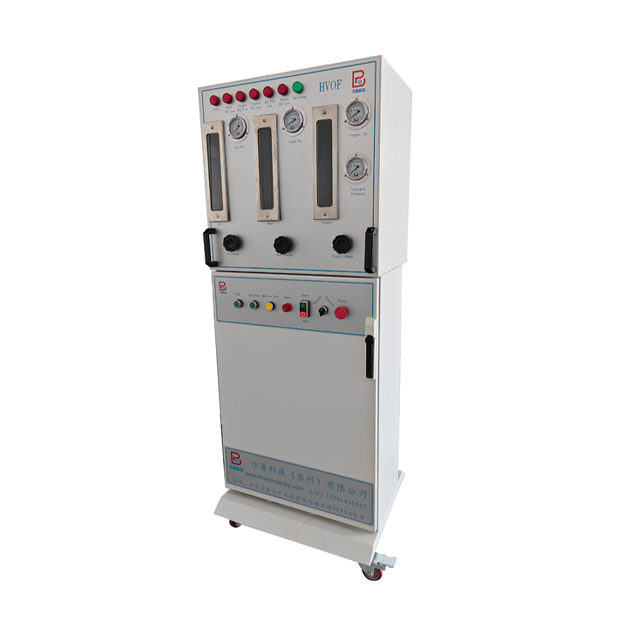
Aligning equipment capabilities with specific industrial failure modes prevents costly misapplications. You must evaluate whether a component fails due to abrasion, fluid erosion, thermal fatigue, or structural degradation before specifying a coating process.
Target applications for high-velocity systems include components subjected to severe mechanical abuse. Pump housings, hydraulic piston rods, gate valve components, aircraft landing gear, and heavy load-bearing support equipment require this technology. These parts operate in environments where physical wear and chemical attack occur simultaneously.
Ideal materials for this process include hard carbides and specialty metallic alloys. Tungsten carbide-cobalt, chromium carbide-nickel chromium, Inconel, and Hastelloy perform exceptionally well. The lower temperatures prevent the decarburization of tungsten carbide, maintaining its extreme hardness.
Success criteria for these applications involve environments demanding extreme erosion resistance. Components facing 15,000 PSI fluid jet impacts, abrasive slurry flows, or heavy sliding friction require dense, highly bonded microstructures. It is the definitive choice for zero-permeability corrosion barriers in offshore and petrochemical applications.
Target applications for plasma systems involve extreme heat management and specialized surface interactions. Gas turbine engine blades, aerospace combustion chambers, medical orthopedic implants, and large surface area components rely heavily on this technology. These parts require coatings that manage thermal transfer or promote biological integration.
Ideal materials include high-melting-point ceramics. Yttria-stabilized zirconia, alumina, titanium, and hydroxyapatite are standard feedstocks. Only the extreme temperatures of a plasma plume can effectively melt these refractory materials for proper deposition.
Success criteria center on applications requiring thermal barrier coatings. The inherent porosity of plasma-sprayed ceramics is a functional advantage here. The microscopic voids reduce thermal conductivity, insulating the underlying metal from turbine combustion temperatures. This porosity also provides strain tolerance, allowing the ceramic coating to expand and contract during extreme thermal cycling without spalling off the substrate. It is also the preferred method for abradable clearance control coatings in compressor casings.
| Industry | Component | Recommended Process | Primary Failure Mode Prevented |
|---|---|---|---|
| Oil & Gas | Gate Valve Internals | High-Velocity Combustion | High-pressure fluid erosion and sliding wear |
| Aerospace | Turbine Blades | Atmospheric Plasma | Thermal fatigue and oxidation |
| Hydraulics | Piston Rods | High-Velocity Combustion | Abrasive wear and saltwater corrosion |
| Medical | Orthopedic Implants | Atmospheric Plasma | Lack of osseointegration (requires porous titanium) |
| Power Generation | Kaplan Turbine Runners | High-Velocity Combustion | Cavitation and slurry erosion |
Integrating these systems into a production environment requires analyzing commercial and operational realities. Resource consumption, facility infrastructure, and production throughput dictate the long-term viability of the chosen technology.
High-velocity economics present specific operational realities. While the initial equipment acquisition may be lower compared to advanced atmospheric plasma systems, the ongoing operational expenses are substantial. The process consumes massive volumes of industrial gases. Continuous supplies of high-pressure oxygen and fuel gases are mandatory. Additionally, the high-quality carbide powders required are often dense and expensive. Transfer efficiency and powder utilization rates become critical metrics to monitor.
Plasma economics involve significant initial capital expenditure. The power supplies, heavy-duty water chillers, and complex control consoles require substantial upfront investment. Operational expenses are driven by high electricity consumption to maintain the DC arc. Furthermore, the process consumes expensive inert gases like argon and helium. Maintenance costs also factor in heavily, as the copper anodes and tungsten cathodes inside the plasma torch degrade rapidly and require frequent replacement to maintain arc stability.
Deposition rates determine how fast a component can be coated and returned to service. Spray rates are measured in kilograms per hour. High-velocity systems generally offer high deposition rates for metallic and carbide powders, efficiently building thick, dense layers. Plasma systems vary widely based on the ceramic being sprayed, but often require more passes to build thickness due to the tensile stress limitations mentioned earlier.
Automation integration is non-negotiable for both systems. Manual operation cannot maintain the precise standoff distances, traverse speeds, and step-over increments required for consistent coating quality. Six-axis robotic arms and synchronized part manipulators must be integrated to ensure uniform thermal distribution and coating thickness across the entire production run.
Acoustic and ventilation needs demand heavy infrastructure. Both processes generate extreme noise levels, frequently exceeding 110 to 120 decibels. Dedicated, soundproof acoustical enclosures are mandatory to protect operators and comply with occupational safety regulations. Robust dust collection and wet filtration systems are also required to capture overspray and prevent hazardous particulate accumulation.
Fuel storage introduces strict safety and regulatory compliance requirements. High-velocity operations require the safe storage and manifolding of high-pressure oxygen and highly combustible fuels. Facilities must implement blast walls, specialized ventilation, and strict fire suppression protocols to handle liquid kerosene or pressurized hydrogen safely.
Deploying thermal coating technologies involves inherent physical risks to the components being treated. Engineering teams must understand these experience-based realities and implement mitigation strategies during the process evaluation phase.
The primary risk during application is substrate overheating. Continuous exposure to the spray plume transfers massive amounts of heat into the part. This can cause dimensional warping, unintended metallurgical changes, or a complete loss of temper in heat-treated substrates.
Mitigation requires aggressive thermal management. Operators must implement cryogenic cooling systems or high-pressure compressed air jets directed at the part during the spray cycle. Strict robotic traverse programming is also essential. By increasing the traverse speed and allowing adequate cooling time between passes, engineers can maintain the substrate temperature below critical thresholds. This is especially critical when utilizing high-temperature plasma systems on thin-walled components.
The risk here involves uneven coating build-up or entirely missed areas on large structural parts or intricate, multi-faceted geometries. Poor step-over programming leads to banding, weak spots, and premature failure in the field.
Mitigation depends on matching the plume characteristics to the part. Plasma spray features a wider, more divergent plume. This makes it highly efficient for covering large, continuous surface areas uniformly. High-velocity systems produce a tightly focused stream. This requires highly precise robotic step-overs to ensure even coverage, but makes it superior for targeting localized, high-wear zones on complex shafts or valve gates without excessive overspray.
Both processes are strictly line-of-sight technologies. The spray particles travel in a straight line from the nozzle to the substrate. The risk is the inability to uniformly coat internal diameters, deep grooves, or complex undercuts.
Mitigation involves evaluating specialized hardware. Specialized internal diameter torches are available for both technologies, designed to fit inside bores and project the spray at an angle. However, these torches often operate at reduced power levels. For areas that must not be coated, engineers must invest in precision masking solutions. High-temperature silicone tapes, fiberglass compounds, and custom-machined metal shadow masks are required to protect non-coated areas from the aggressive blast of the spray plume.
Conduct a cost-per-part analysis based on local gas, electricity, and powder consumption rates to determine baseline operational expenses.
Request standardized coupon testing from equipment manufacturers using your exact substrate material to verify bond strength and porosity metrics.
Audit your current facility infrastructure to confirm readiness for high-decibel acoustic enclosures, hazardous dust collection, and combustible gas storage.
Assess the geometric complexity of your components to determine if specialized internal diameter torches or custom robotic masking solutions are required.
A: While technically possible with equipment modifications and specialized low-melting-point powders, it is not recommended. Plasma spray remains the industry standard for ceramics. The lower temperatures of combustion systems are generally insufficient to fully melt refractory ceramics like zirconia or alumina, leading to poor coating quality and weak adhesion.
A: High-velocity oxygen fuel systems generally produce thicker coatings. The high kinetic impact generates compressive residual stresses within the coating layer. This compressive state prevents the coating from pulling itself apart, allowing operators to build up significantly thicker layers without the delamination associated with the tensile stresses found in plasma coatings.
A: The controlled porosity in plasma-sprayed ceramics acts as an insulator. The microscopic voids disrupt heat transfer, significantly reducing the thermal conductivity of the layer. Additionally, this porous structure provides crucial strain tolerance, allowing the ceramic to expand and contract during extreme thermal cycling without separating from the metal substrate.
A: High-velocity systems present severe acoustic hazards exceeding 120 decibels and require the management of highly combustible gases and high-pressure oxygen. Plasma systems present electrical hazards from high-voltage direct current, emit dangerous levels of ultraviolet radiation from the arc, and generate ozone gas, requiring specialized dark shielding and aggressive exhaust ventilation.
A: The fundamental requirement is identical. Both processes require aggressive grit blasting using sharp aluminum oxide media. This removes surface oxides and creates a specific, roughened surface profile. This jagged topography is absolutely essential for the semi-molten or fully molten particles to achieve a strong mechanical interlock with the substrate.
A: High-velocity combustion systems generally provide superior bond strength. The supersonic particle velocities create massive kinetic energy. When these particles strike the prepared substrate, they undergo extreme plastic deformation. This high-impact collision forces the material deep into the substrate's asperities, creating a mechanical bond that typically exceeds the cohesive strength of the coating itself.


