
Views: 0 Author: Site Editor Publish Time: 2026-08-04 Origin: Site


In high-stress industrial environments, premature component failure due to abrasion, erosion, or corrosion translates directly to catastrophic downtime and revenue loss. Engineering and procurement teams face a strict equipment decision when upgrading surface engineering capabilities. Traditional coating methods, like hard chrome plating or basic weld hardfacing, increasingly fail to meet modern environmental regulations, dimensional tolerance requirements, or extreme operational lifespans. High Velocity Oxygen Fuel (HVOF) technology offers a distinct metallurgical advantage. Originally developed specifically for extreme wear resistance in the aerospace sector, HVOF has evolved into a cross-industry standard. This guide breaks down the specific industries that justify the investment in HVOF Spray Equipment, the technical applications within those sectors, and the framework for evaluating its integration into your production or maintenance facility.
Primary Adoption Drivers: Aerospace, Oil & Gas, and Power Generation sectors utilize HVOF primarily to apply dense, low-porosity carbide coatings (e.g., tungsten carbide grains in a cobalt or nickel matrix) that outperform conventional hardfacing and improve overall system reliability.
Regulatory Compliance: HVOF is rapidly replacing hard chrome plating across heavy manufacturing due to stricter environmental regulations (such as REACH) and superior fatigue debit performance.
Implementation Realities: Successful deployment requires evaluating facility infrastructure, including robotic integration, acoustic enclosures, and specialized dust collection systems.
The HVOF process relies on combusting oxygen and a fuel gas, such as kerosene, hydrogen, or propylene. This mixture ignites within a confined, high-pressure combustion chamber. The expanding gases propel semi-molten powder particles through a converging-diverging de Laval nozzle at supersonic speeds. This specific kinetic energy yields superior coating density. The particles strike the substrate with immense force. They flatten upon impact and form overlapping splats. This creates an exceptionally dense mechanical bond that locks into the microscopic asperities of the prepared substrate.
Conventional spray systems rely heavily on thermal energy. They melt particles completely before impact. HVOF flips this ratio. It prioritizes kinetic energy over thermal energy. Particles remain semi-molten. They do not overheat or oxidize excessively during flight. This kinetic dominance achieves higher bond strengths. Adhesion often exceeds 10,000 psi when tested under ASTM C633 standards. Porosity levels drop below 1%. Plasma or twin-wire arc spray systems cannot match these metrics. Their higher thermal energy introduces more porosity, oxide inclusions, and internal tensile stresses.
HVOF excels at applying carbide-based materials. Tungsten carbide and chromium carbide are the most common. These hard grains require a metallic binder matrix to adhere to the substrate and provide ductility. Cobalt, nickel, and chromium serve as these binders. The binder dictates the coating's environmental resistance. A cobalt matrix provides maximum pure abrasion resistance for dry environments. A nickel-chromium matrix excels in combined wear-corrosion environments, particularly where aqueous chlorides are present. Engineers tailor these combinations to specific operational hazards. The semi-molten state preserves the carbide grain structure. It prevents the carbides from dissolving into the binder during flight. This retains the material's extreme hardness and wear resistance.
Not every component requires HVOF. You must define clear success criteria before specifying this process. A component is a strong candidate if it meets specific operational demands.
Requires extreme wear resistance against sliding friction, fretting, or particulate erosion.
Demands tight dimensional tolerances post-grinding, often requiring mirror finishes or specific Ra values.
Needs minimal thermal distortion to the substrate during application.
Operates in environments where fatigue strength is a primary failure mode.
Requires a coating free of interconnected porosity to prevent corrosive media from reaching the base metal.
HVOF is a relatively cold process for the substrate. Bulk substrate temperatures rarely exceed 300°F (150°C) during application. This minimal thermal input prevents metallurgical changes. It eliminates thermal distortion in precision components. Parts requiring high fatigue strength are ideal candidates. The compressive stresses imparted by HVOF coatings actually improve fatigue life, contrasting sharply with the tensile stresses introduced by welding or hard chrome plating.
The aerospace sector established the foundation for HVOF. Engineers originally developed the process to meet strict aviation demands. The industry requires rigorous quality standards. Component failure is not an option. HVOF sets the baseline for high-performance surface engineering across commercial and military platforms.
Landing gear components endure massive impact loads during touchdown. They also face severe environmental corrosion from runway de-icing fluids, hydraulic fluids, and coastal air. Historically, manufacturers relied on hard chrome plating to protect these high-strength steel components. Environmental regulations now restrict hexavalent chromium due to its toxicity. The industry transitioned to HVOF tungsten carbide coatings. These coatings meet all environmental mandates. They also provide superior wear-corrosion resistance. Maintaining the fatigue life of high-strength steel substrates like 300M is paramount. Hard chrome plating introduces micro-cracks. These cracks reduce fatigue life and act as stress concentrators. HVOF applies compressive stress. This preserves the structural integrity of the landing gear steel and extends the time between overhauls.
Jet engines operate in extreme conditions. Compressor blades face constant solid particle erosion from ingested sand, volcanic ash, and runway debris. Rotor shafts require precise bearing journals to maintain alignment at high RPMs. HVOF protects these turbine engine applications. The process applies dense coatings to complex geometries. Precise robotic control is an absolute necessity here. Robots maintain exact standoff distances. They ensure uniform coating thickness across curved blade surfaces and intricate shaft profiles. Manual spraying cannot achieve this consistency. Uneven coatings cause rotor imbalance. This leads to catastrophic engine vibration and premature bearing failure.
Aviation applications require strict oversight. Nadcap accreditation is mandatory for aerospace surface treatments. OEM specifications dictate exact spray parameters. They define powder chemistry, particle size distribution, gas flow rates, and traverse speeds. Validating HVOF processes involves extensive metallurgical testing. Facilities must prove consistent bond strength and porosity levels through regular coupon testing. Metallographic preparation and microscopic evaluation confirm the coating structure. Compliance ensures every coated component meets flight-safety standards and performs predictably in the field.
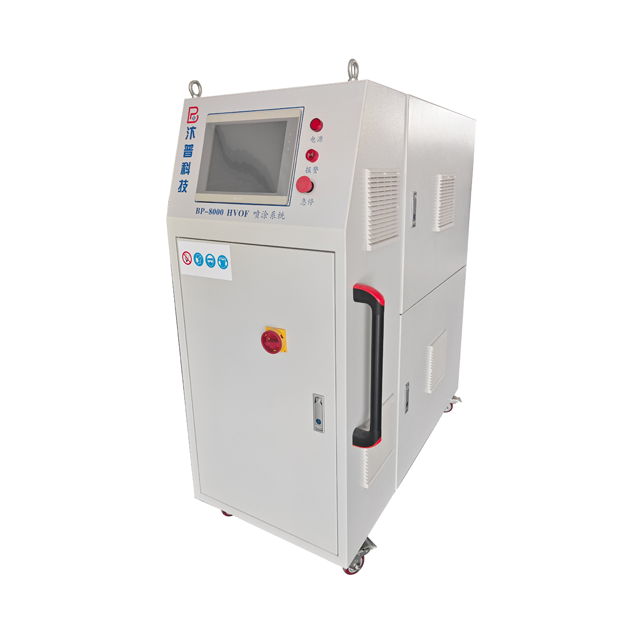
The energy extraction sector destroys unprotected metal. Equipment operates deep underground or in harsh offshore environments. Maintenance interventions are highly complex and disruptive. Extending component life directly increases production uptime and reduces intervention costs.
Drilling operations utilize heavy muds. These fluids carry abrasive rock cuttings back to the surface. Measurement While Drilling (MWD) and Logging While Drilling (LWD) tools face constant abrasion against the borehole wall. Fracking operations pump millions of pounds of silica sand at extreme pressures. This creates severe abrasive wear on downhole tools. Fracking plungers face relentless scoring from the proppant. HVOF coatings provide a hardened barrier. They extend the mean time between failures (MTBF) significantly. High-pressure pumping equipment relies on these coatings. Without them, plungers fail in days. With HVOF, they operate reliably for months, maintaining pressure and efficiency.
Fluid control systems face severe service conditions. Metal-to-metal sealing surfaces experience galling under high pressure. Sliding wear destroys ball valves and gate valves rapidly. HVOF mitigates this galling. It provides a hard, low-friction surface that maintains seal integrity. Well fluids often contain hydrogen sulfide (H2S) and carbon dioxide (CO2). These corrosive elements attack base metals, causing pitting and stress corrosion cracking. Particulate erosion compounds the damage. Centrifugal and positive displacement pumps suffer heavily. HVOF nickel-chromium matrices resist this combined wear-corrosion attack. They maintain pump efficiency and prevent hazardous leaks in topside offshore facilities.
Operators must assess the viability of HVOF for reconditioning. Worn parts often undergo dimensional restoration. Technicians strip the old coating using chemical or mechanical means. They grind the substrate clean to remove any fatigued metal. An Industrial Thermal Spray System applies a new HVOF layer. Final grinding restores original OEM dimensions. This reconditioning process saves massive replacement costs and reduces lead times. Applying coatings during original manufacturing is equally critical. OEMs now integrate HVOF into their initial designs. This proactively extends the baseline lifespan of the equipment and provides a competitive advantage in equipment reliability.
Power plants demand continuous operation. Turbine efficiency dictates overall plant profitability. Degradation of internal components reduces power output and increases fuel consumption. Surface engineering maintains optimal aerodynamic and thermodynamic performance.
IGTs operate at extreme temperatures. Transition pieces and combustion liners face severe thermal stress. High-temperature oxidation attacks the metal. Solid particle erosion degrades turbine blades. HVOF provides essential protection. It applies MCrAlY (Metal, Chromium, Aluminum, Yttrium) bond coats. These coatings resist oxidation by forming a protective alumina scale. They also provide synergy with subsequent Thermal Barrier Coatings (TBCs). The rough surface profile of the HVOF bond coat anchors the ceramic TBC. This dual-layer system allows turbines to operate at higher, more efficient temperatures without melting the base superalloys.
Coal and biomass power plants face severe erosion issues. Boiler tubes suffer from fly ash erosion and high-temperature corrosion. Steam turbines experience solid particle erosion from exfoliated boiler scale. This scale impacts the turbine blades at high velocities, altering their aerodynamic profile. HVOF chromium carbide coatings protect these blades. They resist the high-temperature erosion better than tungsten carbide, which oxidizes at elevated temperatures. Protecting the leading edges of steam turbine blades maintains turbine efficiency and prevents catastrophic blade failure.
Renewable energy infrastructure faces unique wear challenges. Hydroelectric plants utilize Francis and Pelton turbine runners. Water flow causes severe cavitation, where collapsing vapor bubbles pit the metal surface. Silt in the river water creates abrasive erosion. HVOF coatings combat both cavitation and silt erosion. They maintain the precise hydrodynamic profile of the runners. Wind turbines face different issues. Main shaft bearings endure immense loads. Hydraulic pitch cylinders suffer from fretting wear due to constant micro-movements. HVOF protects these components from micro-welding and surface fatigue. This ensures reliable pitch control during high wind events.
Heavy industries process massive volumes of raw materials. The equipment endures relentless physical punishment. Impact, abrasion, and friction are constant operational realities that degrade machinery rapidly.
Wire manufacturing involves continuous friction. Capstans, drawing blocks, and tensioning sheaves pull miles of steel wire. This continuous wire friction causes severe grooving. Unprotected blocks develop deep channels. These channels damage the wire surface and cause wire breaks. HVOF tungsten carbide coatings extend the life of these blocks. They provide a glass-hard surface. The wire glides without cutting into the capstan. This maintains wire quality and reduces equipment changeovers.
Mining environments destroy hydraulic systems. Excavators and haul trucks operate in abrasive dust. Hydraulic cylinders face severe scoring from rock impacts. Suspension struts endure heavy loads and abrasive ingress. Ground-engaging tools suffer massive impact and abrasion. HVOF protects these exposed cylinder rods. It provides a much tougher barrier than standard chrome. The coating resists rock strikes. It prevents abrasive dust from bypassing the hydraulic seals. This eliminates catastrophic fluid leaks in the field and keeps heavy machinery operational.
Continuous processing lines rely on precision rollers. Paper mills use calendar rolls, Yankee dryers, and corrugating rolls. Steel plants use continuous casting rollers and galvanizing sink rolls. These rolls must maintain exact dimensions. They also require specific surface finishes to impart the correct texture to the product. HVOF applies wear-resistant coatings to these large rolls. Operators evaluate surface finish capabilities carefully. HVOF coatings can be ground and lapped. They achieve mirror finishes when required. This flawless surface transfers directly to the finished paper or steel product, ensuring high manufacturing yields.
Integrating this technology requires careful planning. You must evaluate alternative solutions. You must also understand the strict facility requirements. This is not a simple plug-and-play installation. It requires dedicated infrastructure and specialized training.
Engineers must compare HVOF against other hardfacing methods. Each process has distinct metallurgical trade-offs regarding heat input, bond type, and coating density.
| Process | Bond Type | Heat Affected Zone (HAZ) | Coating Density | Typical Application |
|---|---|---|---|---|
| HVOF Spray | Mechanical | None (Substrate < 300°F) | Very High (>99%) | Precision parts, tight tolerances, fatigue-sensitive steels. |
| Weld Hardfacing | Metallurgical | Large (High distortion risk) | High (100% dense) | Heavy impact tools, thick build-ups, mining buckets. |
| Laser Cladding | Metallurgical | Minimal (Low dilution) | High (100% dense) | High-value localized repair, severe impact resistance. |
| Plasma Spray | Mechanical | Low | Medium (90-95%) | Thermal barrier coatings, ceramics, high-clearance parts. |
Weld hardfacing offers high deposition rates. However, it creates a large heat-affected zone (HAZ). This causes thermal distortion. It also limits application on precision geometries. Laser cladding provides a true metallurgical bond. It has lower dilution rates than welding. HVOF strikes a balance. It provides extreme density without thermal distortion. It is ideal for parts requiring post-coating dimensional grinding where welding would warp the component beyond repair.
Safety and infrastructure demand significant attention. The process generates extreme noise. Noise levels easily exceed 120 dB. Soundproof acoustic rooms are an absolute necessity. You cannot operate this equipment on an open shop floor. High-velocity dust collection is equally critical. The process generates fine metallic dust. This dust is hazardous and potentially explosive. Specialized wet downdraft tables or HEPA filtration systems must capture this overspray to protect operators and comply with environmental regulations.
Safe gas handling requires strict protocols. The system utilizes high-pressure oxygen. It also uses fuels like kerosene, hydrogen, or propylene. Facilities must install dedicated gas storage pads. Piping must meet stringent industrial safety codes. Leak detection and automated shut-off valves are mandatory. You also need industrial chillers to cool the spray gun, as the internal combustion temperatures would otherwise melt the copper nozzles.
Manual HVOF spraying is practically obsolete. The kinetic energy and noise make manual operation unsafe. More importantly, manual spraying cannot guarantee quality. The process demands a 6-axis robotic arm. You also need precise part-manipulation turntables. The robot ensures a consistent standoff distance. It maintains the exact traverse speed. This repeatable programming guarantees consistent coating parameters. Without robotics, coating thickness varies. Porosity increases. Bond strength drops. Automation is the only way to achieve aerospace-grade or oilfield-grade reliability.
Take the following actions to advance your surface engineering capabilities and implement this technology effectively:
Conduct a metallurgical failure analysis on currently failing parts to identify the exact wear mechanisms and determine if carbide coatings are the correct solution.
Request coated coupon testing from an equipment OEM to verify bond strength, porosity metrics, and microhardness for your specific substrate materials.
Download a comprehensive facility requirement checklist to audit your existing infrastructure for high-pressure gas storage and acoustic enclosure compliance.
Develop a robotic integration plan focusing on the complex geometries of your most critical components to ensure automated, repeatable coating application.
A: The process primarily applies carbide grains, such as tungsten carbide and chromium carbide. These grains sit within metallic matrices like cobalt, nickel, or chromium. The system also effectively applies Inconel, Hastelloy, and various other superalloys for high-temperature corrosion resistance.
A: HVOF relies on high kinetic energy and lower thermal energy. This makes it superior for applying dense, low-porosity carbides without degrading the grain structure. Plasma spraying uses very high thermal energy and lower kinetic energy, making it better suited for melting and applying high-melting-point ceramics.
A: Yes. It is the primary industrial replacement for hard chrome. It eliminates the environmental hazards associated with hexavalent chromium. It offers superior wear resistance and imparts compressive stresses, which significantly improves the fatigue life of high-strength steel substrates compared to chrome plating.
A: Installations require a soundproof acoustic enclosure to manage noise levels exceeding 120 dB. You need specialized high-velocity dust collection to handle hazardous overspray. The cell requires a 6-axis robot and a part-manipulation turntable. Finally, you need safe, high-pressure gas storage and piped delivery systems.
A: Standard operational thicknesses range from 0.002 inches to 0.020 inches (50 to 500 microns). Applying thicker layers increases internal residual stresses, which can lead to coating delamination or spalling. Engineers specify the exact thickness based on wear allowances and post-coating grinding requirements.
A: No. It is considered a cold process relative to welding. The supersonic particle velocity means heat transfers rapidly, but bulk substrate temperatures typically remain below 300°F (150°C). This prevents metallurgical changes, eliminates heat-affected zones, and prevents thermal distortion in precision components.


