
Views: 0 Author: Site Editor Publish Time: 2026-08-13 Origin: Site


A common misconception in industrial finishing is assuming that upgrading to robotic applicators alone will resolve finish inconsistencies and material waste. Facilities often invest heavily in advanced robotics, expecting immediate perfection. However, the applicator is only the final delivery point. The true operational reality of automated finishing reveals that inadequate fluid delivery, poor mixing, and inefficient color change processes create severe bottlenecks. These underlying issues easily negate the speed advantages of automation. If your paint supply fluctuates, your robot will simply apply a bad finish faster.
This brings us to the supporting infrastructure. You must evaluate your fluid handling systems not as optional add-ons, but as foundational requirements. Maximizing the uptime and efficiency of any automated paint line depends entirely on what happens before the paint reaches the gun. By optimizing your delivery and mixing systems, you ensure consistent fluid dynamics, reduce manual intervention, and unlock the full potential of your finishing operations.
System Synergy: High-performance automatic painting equipment relies entirely on the precision of its auxiliary systems (pumps, mixers, regulators) to maintain consistent fluid dynamics.
Material Efficiency: Automated color change manifolds and proportioners directly reduce solvent waste, paint consumption, and flush times, driving measurable cost savings.
Quality Assurance: Stable fluid delivery prevents common finish defects (e.g., orange peel, uneven film build), reducing rework and scrap rates.
Labor Reallocation: Automating auxiliary processes reduces operator error and frees up technical personnel to focus on process optimization rather than manual cleaning and troubleshooting.
Integration Readiness: The most effective auxiliary systems feature seamless PLC integration, allowing for centralized monitoring and predictive maintenance.
It is vital to clarify the distinction between primary application hardware and supporting infrastructure. Primary hardware includes robots, reciprocators, and spray guns. These components handle the physical movement and atomization of the coating. In contrast, Spray Auxiliary Equipment encompasses fluid handling, air preparation, mixing, and recovery systems. These systems manage the condition, pressure, and flow of the material before it ever reaches the applicator. You cannot expect a high-end rotary atomizer to perform well if the fluid delivery system feeding it is surging or starving the bell cup.
Auxiliary systems support different motion platforms in unique ways. Multi-gun hard automation setups are designed for high-throughput, standardized parts. They require massive fluid delivery capacity and stable pressure across multiple nozzles simultaneously. Flexible robotic paths, however, demand rapid response times. The fluid delivery must adjust flow rates dynamically as the robot changes speed or distance from the part. The baseline success criteria for any finishing line remain continuous operation, exact mil-build consistency, and minimal manual intervention. Achieving this requires a deep understanding of how fluid behaves under pressure and how to control it precisely.
When you walk a paint line, the difference between a well-integrated system and a poorly integrated one is obvious. A well-integrated system runs quietly, with operators monitoring screens rather than turning wrenches. The fluid delivery is smooth, the atomization is consistent, and the parts come out looking identical every time. A poorly integrated system is chaotic. Operators are constantly adjusting regulators, flushing lines manually, and fighting to keep the paint flowing. This chaos directly impacts the bottom line through increased scrap, higher material usage, and excessive downtime.
Ignoring the integration of your fluid delivery infrastructure leads to severe downstream effects. Pressure drops cause inconsistent atomization, resulting in sags or dry spray. Viscosity fluctuations alter the flow rate, changing the film thickness unpredictably. Off-ratio mixing in two-component systems leads to uncured paint, requiring complete part stripping and rework. These issues stem directly from inadequate control at the supply level. You can spend weeks programming the perfect robot path, but if the fluid pressure drops by 10 PSI halfway through the cycle, the part is ruined.
Manual color changes and flushing in an otherwise automated line introduce hidden inefficiencies. Operators must physically disconnect lines, run solvent, and verify cleanliness. This frequency of operator-induced errors disrupts the production rhythm. Furthermore, inadequate fluid control leads to excessive overspray. This rapid booth-filter loading forces premature maintenance shutdowns and generates unnecessary material waste. You cannot achieve true automation if operators are constantly intervening to manage the paint supply. Every time an operator touches a valve or a hose, you introduce variability into the process.
Consider the impact of a single off-ratio batch of 2K polyurethane. If the mechanical proportioner slips and delivers too much catalyst, the paint cures too fast. It hardens in the lines, ruining hoses, manifolds, and spray guns. The line goes down for hours while maintenance replaces the damaged components. If it delivers too little catalyst, the paint never cures. The parts make it all the way to assembly before someone notices they are sticky. You now have to strip and repaint hundreds of parts. These are the real-world consequences of ignoring your fluid delivery infrastructure.
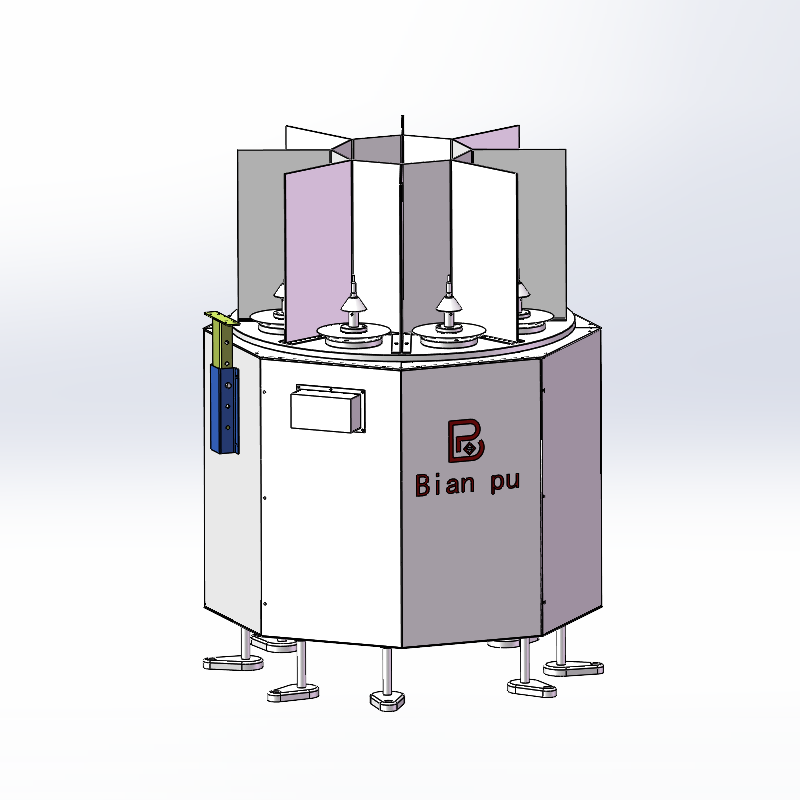
Evaluating pump technologies requires matching the pump to your specific fluid characteristics. Pneumatic piston pumps offer high pressure for heavy materials but can introduce pulsation. Electric pumps provide smoother flow and better energy efficiency, making them ideal for continuous circulation. Hydraulic pumps deliver massive power for high-viscosity coatings. You must choose based on fluid viscosity, shear sensitivity, and required flow rates to prevent material degradation. Pumping a shear-sensitive metallic basecoat with a high-speed gear pump will destroy the metallic flakes, resulting in a muddy, uneven finish.
These auxiliary systems supply specialized Automatic Painting Equipment, including high-performance automatic air spray guns. Whether you use conventional, HVLP, or rotary atomizers, the supply must remain stable. Precision fluid regulators and back-pressure valves play a critical role here. They maintain a pulse-free material supply to the spray gun, ensuring the atomization pattern remains perfectly uniform throughout the spray cycle. A good fluid regulator acts as a shock absorber, smoothing out the pressure spikes from the pump and delivering a steady stream of paint to the applicator.
Circulation systems are another vital component. Paint must be kept moving to prevent settling, especially with heavily pigmented or metallic coatings. A well-designed circulation system keeps the paint mixed and at a consistent temperature from the mix room to the spray booth and back again. This requires careful sizing of hoses, pipes, and back-pressure regulators to maintain the correct velocity without causing excessive shear or pressure drops.
Mechanical proportioners use linked pumps to deliver a fixed ratio of resin and catalyst. While reliable for simple applications, they lack dynamic adjustment capabilities. Electronic plural-component mixing systems offer superior control. They utilize independent dosing valves and flow meters to adjust ratios on the fly. This real-time ratio assurance is necessary for preventing off-ratio curing failures in 2K and 3K coatings. When you are spraying high-solids epoxies or fast-cure urethanes, you need the precision that only an electronic system can provide.
Mass flow meters provide exact measurements of material usage, ensuring the mix is always accurate regardless of viscosity changes. Transitioning from batch-mixing to on-demand mixing eliminates pot-life paint waste. You only mix what you spray. This approach drastically reduces cleaning cycles and prevents catalyzed material from hardening inside your fluid lines, saving both time and replacement parts. On-demand mixing also allows for rapid color changes, as you only need to flush the mixed material from the manifold to the gun, rather than an entire pressure pot.
The integration of these mixing units with the main line PLC is essential. The mixer needs to know when the robot is about to trigger, what color it needs, and what flow rate is required. This communication ensures the mixer is always ready to deliver the exact amount of perfectly mixed paint the moment the gun opens. Without this integration, you risk starving the gun or wasting mixed material during pauses in production.
Automated color change blocks reduce manual technical labor significantly. Instead of an operator manually flushing lines, the system executes a programmed sequence. This minimizes human error and optimizes flushing solvent usage. The mechanical requirements for integrating these manifolds dictate placing them as close to the applicator as possible. This close-coupling minimizes the "paint-in-line" volume, which is the amount of paint that must be flushed during a changeover. The closer the manifold is to the gun, the less paint and solvent you waste.
Paint-saving valve technologies further enhance efficiency. Air and solvent chop sequences use alternating blasts of compressed air and solvent to scrub the line interior. This cleans lines with minimal chemical consumption compared to a continuous solvent flush. The result is a faster color change, less hazardous waste, and higher overall line availability. A well-programmed chop sequence can clean a fluid line using a fraction of the solvent required by a traditional flush, saving thousands of gallons of solvent per year.
Valve design is also critical. You need valves that actuate quickly and seal positively. Dead spaces inside the valve body will trap paint, leading to color contamination on the next cycle. Look for zero-dead-volume valves designed specifically for rapid color change applications. These valves use specialized seals and internal geometries to ensure every drop of paint is flushed out during the cleaning cycle.
Atomizing air must be clean, dry, and temperature-controlled to ensure consistent finish quality. Moisture or oil in the air supply causes craters, blistering, and adhesion failures. Desiccant dryers remove humidity, while air heaters stabilize the temperature, preventing viscosity shifts at the gun tip. Proper air preparation is non-negotiable for high-quality automated spraying. If you are spraying waterborne coatings, even a tiny amount of oil in the air supply will ruin the finish.
Environmental controls complete the auxiliary ecosystem. Solvent recovery systems capture and distill flushing solvents for reuse. Advanced filtration and extraction systems manage overspray and volatile organic compounds (VOCs). These systems support environmental compliance and reduce hazardous waste disposal burdens, keeping your facility safe and operational. A good solvent recovery system can pay for itself in a matter of months by drastically reducing your solvent purchasing and disposal volumes.
Booth air balance is another factor often overlooked. The exhaust system must pull enough air to capture overspray, but not so much that it disrupts the atomization pattern or pulls dirt into the booth. Variable frequency drives (VFDs) on the exhaust fans, tied to pressure sensors in the booth, allow the system to maintain a perfect air balance automatically, regardless of filter loading.
Calculating material savings when upgrading to automated auxiliary systems requires tracking current waste streams. Compare the volume of paint and solvent used during manual mixing and flushing against the precise dosing of an automated system. Precise fluid control minimizes overspray and maximizes transfer efficiency at the applicator level. This is especially critical during complex spray path transitions where flow rates must adjust instantly. If the robot slows down to paint a tight corner, the fluid flow must decrease proportionally to prevent runs and sags.
There is a direct connection between real-time flow regulation and the ability to maintain a highly optimized spray envelope. When the fluid pressure is locked in, the robot can move faster without risking dry spray. This synchronization reduces material consumption while increasing throughput. You get more parts painted per gallon of paint, and you spend less time cleaning up overspray.
| Process Area | Manual Auxiliary Management | Automated Auxiliary Systems |
|---|---|---|
| Mixing Accuracy | Prone to human error, batch waste | Real-time ratio assurance, zero pot-life waste |
| Color Change | Slow, high solvent usage, line volume wasted | Rapid, air/solvent chop, minimal line waste |
| Fluid Pressure | Fluctuates with pump strokes, requires manual adjustment | Pulse-free delivery via closed-loop regulators |
| Data Tracking | Paper logs, estimated usage | Precise flow meter data, PLC logging |
Auxiliary equipment must interface seamlessly with existing automation. Evaluate communication protocols like Ethernet/IP or PROFINET. These protocols allow fluid panels to talk directly to robot controllers and plant-wide SCADA systems. This integration enables centralized control, where a single recipe selection adjusts robot paths, fluid pressures, and atomizing air simultaneously. When a new part enters the booth, the RFID tag tells the PLC which recipe to load, and the entire system adjusts instantly.
Closed-loop feedback systems provide immense value. They automatically adjust fluid pressure and flow rates based on the robotic tool center point (TCP) speed. If the robot slows down to navigate a complex corner, the fluid delivery slows down proportionally. This prevents excessive film build and ensures perfect uniformity across complex geometries. Without closed-loop control, you are relying on static fluid pressures, which limits the speed and flexibility of your robotic programming.
Data collection is another major benefit of PLC integration. Modern fluid panels track every drop of paint and solvent used, every pressure fluctuation, and every valve actuation. This data allows you to identify trends, optimize maintenance schedules, and troubleshoot issues before they cause downtime. You can see exactly how much paint was used on a specific shift, or track the wear on a pump seal over time.
Handling abrasive, waterborne, or highly corrosive coatings accelerates the wear on wetted parts. You must analyze the lifecycle of seals, needles, and pump stators. Select materials like tungsten carbide or specialized polymers based on your specific coating chemistry. Predictive maintenance tracking within the PLC can alert you before a seal fails, preventing catastrophic leaks. If you are pumping zinc-rich primers, standard stainless steel parts will be destroyed in weeks. You need hardened components designed specifically for abrasive materials.
Evaluate the ease of maintenance when selecting equipment. Look for tool-less fluid section removal and modular valve designs. These features allow technicians to swap out wear parts in minutes rather than hours. Reducing planned downtime keeps the line running and maximizes production capacity. A pump that takes four hours to rebuild is a liability. A pump with a modular fluid section that can be swapped in fifteen minutes is an asset.
Standardization is also key. Try to use the same pumps, regulators, and valves across your entire facility. This reduces the number of spare parts you need to keep in stock and simplifies training for your maintenance team. When a component fails, the technician should know exactly how to fix it without having to consult a manual.
Compare auxiliary requirements for high-volume, low-mix lines versus low-volume, high-mix lines. Hard automation systems prioritize high-throughput, multi-gun setups. They require massive fluid delivery capacity and simple, robust controls. These systems are designed to paint the same part thousands of times a day with minimal variation. The fluid delivery system must be able to supply a large volume of paint at a consistent pressure to multiple guns simultaneously.
Robotic systems require rapid, frequent color changes and agile path adaptation. They need sophisticated fluid panels capable of dynamic flow control and rapid flushing sequences. The fluid delivery system must be able to change colors in seconds and adjust flow rates instantly as the robot moves. You must match the complexity of your auxiliary equipment to the flexibility of your application hardware.
Installing a highly flexible, rapid-color-change fluid panel on a hard automation line that only sprays one color is a waste of resources. Conversely, installing a simple, high-volume pump on a robotic line that changes colors twenty times a shift will result in massive solvent waste and excessive downtime. You must align the capabilities of the fluid delivery system with the production requirements of the line.
Address the trade-off between installing highly sophisticated electronic mixing systems and the technical maturity of the in-house maintenance team. Advanced systems require technicians who understand PLCs, flow meters, and closed-loop control loops. If your maintenance team is only comfortable with pneumatic pumps and mechanical regulators, introducing a complex electronic proportioner will cause significant growing pains.
Highlight the long-term benefit of shifting operator duties from error-prone manual labor to high-level process monitoring and preventive maintenance. Training your team to manage these advanced systems pays off in the long run through increased uptime and better finish quality. You must invest in training alongside the equipment upgrade. A sophisticated fluid panel is useless if no one in the plant knows how to troubleshoot it.
Consider the user interface. A good fluid panel should have an intuitive touchscreen interface that allows operators to easily select recipes, monitor flow rates, and initiate flush sequences. Complex engineering parameters should be password-protected to prevent unauthorized adjustments. The goal is to make the system easy to operate while keeping the complex control logic hidden from the daily user.
Chemical incompatibility between new auxiliary wetted parts and specific coating formulations is a major risk. Waterborne coatings require stainless steel components to prevent rust. Acid-catalyzed or high-solids materials may aggressively degrade standard seals. If you mismatch materials, you will face constant leaks and contamination. A single brass fitting in a waterborne fluid line will cause galvanic corrosion, ruining the paint and the equipment.
Mitigate this by conducting thorough material compatibility audits. Work with your coating supplier to verify the chemical resistance of all O-rings, hoses, and pump packings. Always perform pilot testing on fluid lines prior to full-scale deployment. Pumping the actual production material through a test rig reveals shear issues or curing problems before they impact your main line. Do not rely solely on chemical compatibility charts; test the actual material under production conditions.
Pay attention to hose selection. Different coatings require different hose materials. Teflon-lined hoses are great for solvent resistance but can be stiff and difficult to route. Nylon hoses are more flexible but may not handle aggressive solvents. Choose the right hose for the specific application, taking into account flexibility, pressure rating, and chemical compatibility.
Communication failures between auxiliary equipment controllers and primary robotic PLCs cause severe timing delays. If the robot triggers the gun but the fluid panel lags, you get bare spots on the part. These integration bottlenecks usually stem from mismatched network speeds or poorly mapped I/O signals. A delay of even a few milliseconds can result in a visible defect on the finished part.
Standardize communication protocols across all equipment to prevent this. Require vendor-supplied integration mapping and validation during the procurement phase. The systems integrator must prove that the fluid controller responds to robot trigger commands within milliseconds. Run dry-cycle tests to verify timing synchronization before introducing paint. Use an oscilloscope to measure the exact delay between the PLC command and the valve actuation.
Ensure the network architecture is robust. Do not run critical control signals over a congested plant network. Use a dedicated subnet for the paint line automation to ensure fast, reliable communication between the robot, the fluid panel, and the booth controls.
Failure to meet local VOC emission standards or hazardous location requirements can shut down your facility. Paint kitchens and spray booths often fall under ATEX or Class 1 Div 1 classifications due to flammable vapors. Installing non-compliant electrical components in these zones is a critical safety hazard. A single spark from an unrated switch can cause a catastrophic explosion.
Specify intrinsically safe auxiliary components for all hazardous areas. Use pneumatic controls or explosion-proof enclosures where necessary. Integrate automated solvent recovery systems into the initial line design to manage VOC output effectively. Proactive compliance ensures safe operations and avoids costly regulatory fines. Work closely with your local fire marshal and environmental regulators during the design phase to ensure all systems meet the required codes.
Grounding is absolutely critical in any paint line. Every component, from the pump to the spray gun, must be properly grounded to prevent the buildup of static electricity. Implement a strict grounding verification program, checking the continuity of all ground wires on a regular basis. A broken ground wire is a hidden danger that can lead to a fire or explosion.
Upgrading your primary application hardware is only half the battle. The stability, material efficiency, and overall capacity of your paint line depend entirely on the fluid and air delivered to the applicator. Robust supporting infrastructure is the true determinant of process success. To move forward effectively, take the following steps:
Audit your current waste logs, focusing on solvent usage, off-ratio scrap, and color change downtime.
Identify the specific fluid delivery bottlenecks causing the most manual intervention on your line.
Schedule a site audit with a systems integrator to map out necessary upgrades for PLC integration.
Request a pilot demonstration of automated mixing or close-coupled color change manifolds using your production coatings.
A: It includes all supporting infrastructure distinct from the robot or spray gun. This covers fluid pumps, electronic mixers, color change manifolds, fluid regulators, and air preparation units. These systems manage the delivery, pressure, and condition of the paint before atomization.
A: They use close-coupled manifolds located near the spray gun to minimize the paint-in-line volume. Programmed air and solvent chop sequences scrub the lines efficiently, using short bursts rather than a continuous flow, which drastically reduces the total solvent required for flushing.
A: Yes. Most modern fluid panels and electronic proportioners are designed for modular integration. They can be retrofitted to supply existing robots or reciprocators, provided the communication protocols are properly mapped between the new fluid PLC and the existing robot controller.
A: Closed-loop control ensures the fluid flow rate adjusts dynamically to match the robot's tool center point speed. If the robot slows down, the flow reduces automatically. This prevents excessive paint buildup and maintains a consistent film thickness across complex part geometries.
A: Off-ratio mixing usually results from worn pump seals, viscosity fluctuations, or blocked dosing valves in mechanical systems. Upgrading to electronic proportioners with mass flow meters prevents this by constantly measuring and adjusting the resin and catalyst ratios in real time.
A: Atomizing air must be clean, dry, and temperature-controlled. Moisture or oil in the air supply causes craters, blistering, and adhesion failures. Proper desiccant dryers and air heaters stabilize the air, preventing viscosity shifts and ensuring a uniform, defect-free coating application.


